
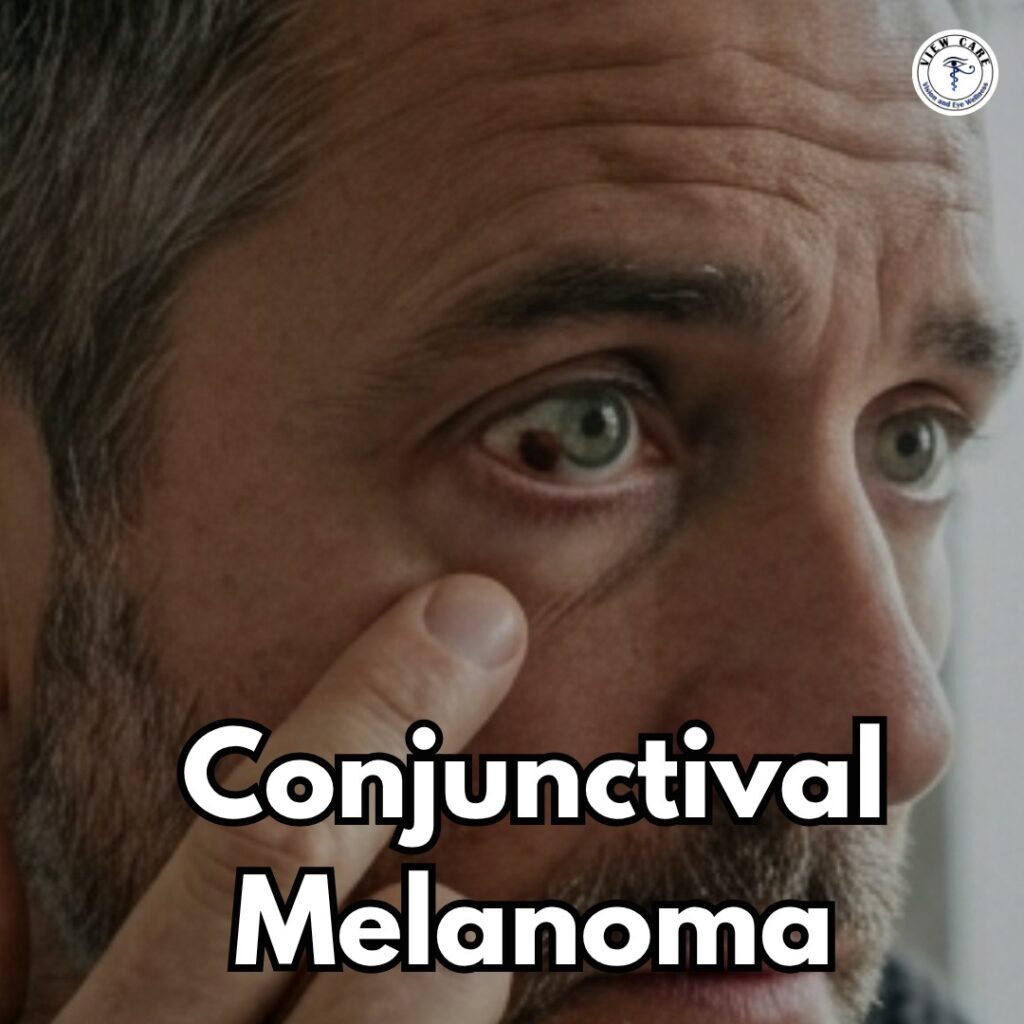
Introduction: Why Should You Know About This Rare Eye Condition?
When we think about eye problems, we usually imagine common issues like dryness, cataracts, or refractive errors. But there are rare conditions that can be serious if ignored—one of them is conjunctival melanoma.
This is a type of cancer that develops in the conjunctiva, the thin, transparent layer covering the white part of your eye. While it is uncommon, early detection can make a huge difference in outcomes.
If you regularly visit an eye specialist, ophthalmologist, or an eye hospital in Delhi like View Care, your chances of catching such conditions early improve significantly.
What Exactly Is Conjunctival Melanoma?
Conjunctival melanoma is a growth of abnormal pigment-producing cells in the eye’s outer layer. These cells normally give color to your skin and eyes, but when they grow uncontrollably, they form a tumor.
Unlike many other eye conditions, this one can spread (metastasize) to other parts of the body if not treated in time.
Is It Common or Rare?
Conjunctival melanoma is rare, especially compared to other eye conditions. However, rarity doesn’t mean harmless. It requires prompt attention from an experienced eye doctor or eye specialist near you.
What Causes Conjunctival Melanoma?
The exact cause isn’t always clear, but several factors may increase the risk:
1. Sun Exposure
Excessive UV exposure can damage eye cells over time.
2. Pre-existing Pigmented Spots
Some people have harmless brown spots (like freckles) on the eye. In rare cases, these can turn cancerous.
3. Fair Skin Tone
People with lighter skin and eye color may have a slightly higher risk.
4. Age Factor
It is more commonly seen in middle-aged and older adults.
Risk Factors You Should Not Ignore
- Long-term sun exposure without eye protection
- History of eye pigmentation changes
- Weak immune system
- Previous eye tumors
Regular eye checkup and eye test at a trusted eye clinic can help detect changes early.
What Are the Symptoms?
One tricky aspect of conjunctival melanoma is that it may look harmless initially.
Common Symptoms Include:
- A dark or brown spot on the white part of the eye
- Growth or change in size of an existing spot
- Redness or irritation that doesn’t go away
- A raised or thickened area on the eye surface
- Visible blood vessels around the lesion
 Important: Not every spot is cancer. But any change should be checked by an eye specialist in Mayur Vihar Phase 1 or nearby areas like Laxmi Nagar.
Signs That Doctors Look For
An experienced ophthalmologist will examine:
- Size and shape of the lesion
- Color variation
- Blood vessel patterns
- Growth over time
Advanced imaging may also be used at a best eye hospital in Delhi to confirm the diagnosis.
How Is It Diagnosed?
Diagnosis usually involves:
1. Eye Examination
A detailed slit-lamp exam by an eye doctor near you
2. Imaging Tests
To understand the depth and spread
3. Biopsy (if needed)
A small tissue sample may be taken to confirm cancer
Treatment Options: What Are Your Choices?
Treatment depends on the size, location, and spread of the tumor.
1. Surgical Removal
The most common and effective treatment
The tumor is carefully removed by an experienced surgeon
2. Cryotherapy (Freezing Treatment)
Used to destroy leftover abnormal cells after surgery
3. Topical Chemotherapy
Eye drops containing anti-cancer medicine
4. Radiation Therapy
Used in more advanced cases
– Early-stage treatment has a much better success rate. This is why visiting a best eye specialist near you matters.
What Happens After Treatment?
Follow-up care is crucial.
- Regular eye exams
- Monitoring for recurrence
- Imaging tests if required
Even after successful treatment, periodic visits to an eye hospital in Delhi like View Care are essential.
When Should You See an Eye Doctor?
Don’t wait if you notice:
- A new dark spot in your eye
- Change in size or color of an existing spot
- Persistent redness or irritation
- Any unusual growth
Searching for a top 5 eye doctor near me or visiting a trusted eye clinic can save your vision—and in some cases, your life.
Possible Complications
If left untreated, conjunctival melanoma can lead to:
- Spread to nearby tissues
- Vision problems
- Recurrence even after treatment
- Spread to other organs (rare but serious)
This is why early diagnosis at a best eye hospital in Delhi is critical.
Real-Life Success Stories
Story 1: Mr. Sharma’s Early Detection Saved His Eye
Mr. Sharma, a 52-year-old businessman from Delhi, noticed a small brown spot in his eye. He initially ignored it, thinking it was harmless.
During a routine eye checkup, his eye specialist in Laxmi Nagar noticed changes in the spot and advised further tests.
The tumor was detected early and removed successfully at View Care Eye Hospital.
Today, he continues his regular follow-ups and enjoys normal vision.
– Lesson: Early detection makes treatment simpler and more effective.
Story 2: Mrs. Kaur’s Journey to Recovery
Mrs. Kaur, aged 45, experienced redness and a growing patch in her eye. She visited an eye hospital in Delhi after her symptoms worsened.
Her condition was diagnosed as conjunctival melanoma. She underwent surgery followed by cryotherapy.
With proper care and regular follow-ups at View Care, she made a full recovery.
-Lesson: Timely treatment can lead to excellent outcomes.
Prevention: Can You Reduce Your Risk?
While not all cases can be prevented, you can lower your risk:
- Wear UV-protective sunglasses
- Avoid excessive sun exposure
- Get regular eye tests
- Monitor any eye pigmentation
Why Regular Eye Checkups Matter
Choosing a reliable eye hospital in Delhi like View Care ensures expert diagnosis and care.
Final Thoughts
Conjunctival melanoma may be rare, but it is not something to ignore. The good news is that early detection and timely treatment can lead to excellent outcomes.
If you notice anything unusual in your eyes, don’t delay—consult an eye doctor or visit a trusted eye clinic immediately.
Your eyes are precious. Take care of them.