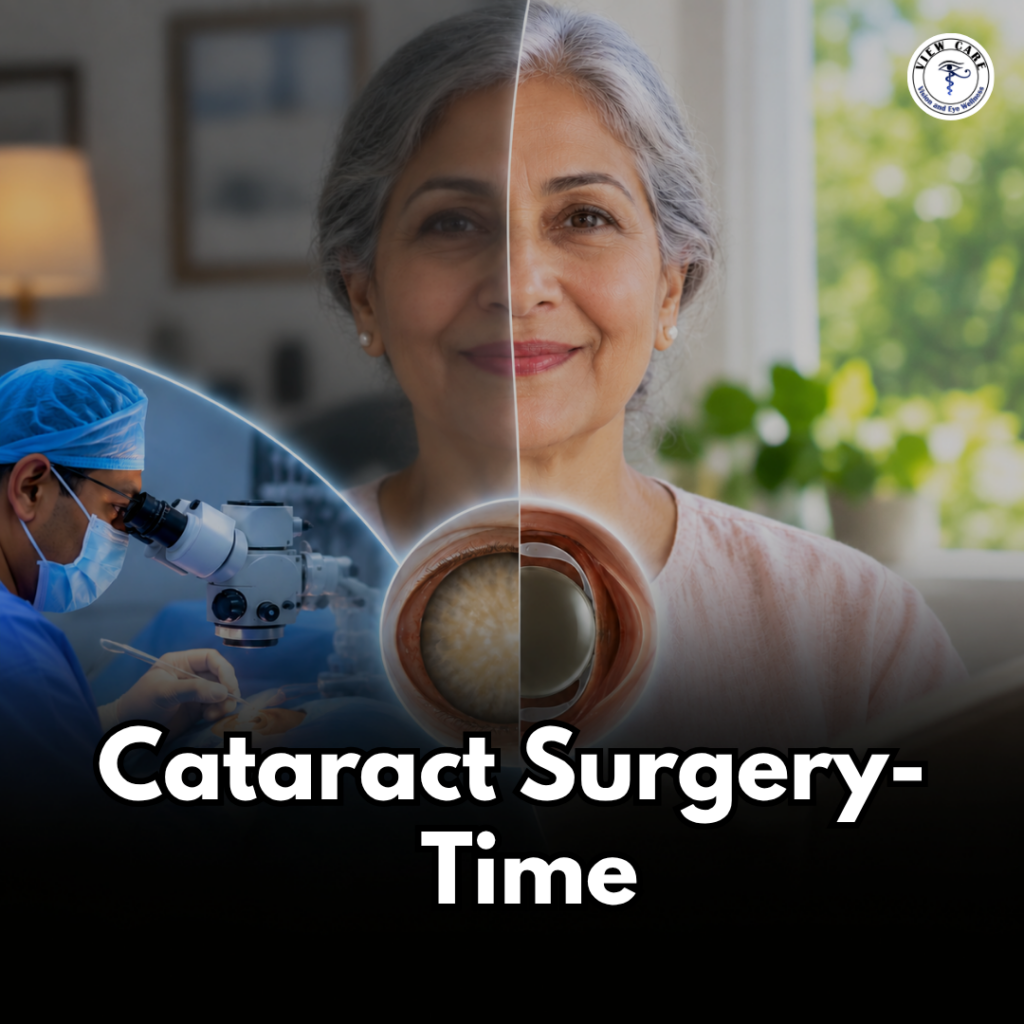
If a cataract is making it difficult to read, drive, watch television, work, or perform everyday activities, it may be the right time to discuss cataract surgery with an ophthalmologist. Surgery is not based only on age or a particular vision number. The right timing depends on how much the cataract is affecting your daily life and your overall eye health.
What Is a Cataract?
A cataract is a cloudy area that develops in the natural lens of the eye. Normally, the lens is clear and helps focus light onto the retina. When the lens becomes cloudy, vision can gradually become blurry, hazy, or less clear.
Cataracts are commonly associated with ageing, but they can also develop due to factors such as diabetes, previous eye surgery, steroid use, eye injury, or other eye conditions.
In the early stages, a cataract may not cause significant problems. As it progresses, however, vision may become increasingly affected.
When Is the Right Time for Cataract Surgery?
There is no single age or vision number that determines when cataract surgery should be done.
For most people, cataract surgery becomes worth considering when the cataract starts interfering with everyday activities or quality of life.
You may want to discuss surgery with an eye specialist if you are experiencing difficulty with:
· Reading books, newspapers, or phone screens
· Driving, especially at night
· Recognising faces
· Watching television
· Working or performing detailed tasks
· Seeing in low-light conditions
· Managing daily activities independently
· Dealing with glare from headlights or bright lights
Visual acuity is important, but it is not the only factor. Some people may have a reasonably good vision-test result but still experience significant glare, reduced contrast, or difficulty performing specific activities.
Do You Need to Wait Until the Cataract Becomes “Mature”?No. Cataract does not necessarily have to become mature before surgery.
Modern cataract surgery is generally considered when the cataract is causing meaningful visual problems. Waiting for a cataract to become very advanced is not routinely necessary.
The decision should be made after discussing your symptoms, eye examination findings, lifestyle, and the potential benefits and risks of surgery with an ophthalmologist.
Common Signs That a Cataract May Be Affecting Your VisionCataracts usually develop gradually. Common symptoms include:
· Blurred or cloudy vision
· Increased sensitivity to bright light
· Glare or halos around lights
· Difficulty seeing at night
· Faded or less vivid colours
· Frequent changes in spectacle prescription
· Difficulty reading or doing close-up work
· Double vision in one eye in some cases
These symptoms can have causes other than cataract, so a proper eye checkup is important before deciding on treatment.
Can Cataract Surgery Improve Vision?Cataract surgery removes the cloudy natural lens and replaces it with an artificial intraocular lens (IOL).
For people whose vision problems are mainly caused by cataract, surgery can significantly improve clarity and help with everyday visual activities. However, the final visual result can also depend on other conditions affecting the eye, such as retinal, corneal, optic nerve, or macular problems.
This is why a detailed examination by an eye specialist is important before surgery.
What Happens During Cataract Surgery?
Cataract surgery is usually performed as a day-care procedure.
The eye is numbed, commonly using local anaesthesia or numbing eye drops. The cloudy lens is removed and replaced with an artificial intraocular lens.
The procedure itself is generally relatively short, although the exact duration can vary depending on the individual case.
Your ophthalmologist will also discuss the type of IOL that may be appropriate for your eyes and visual needs.
What Is Recovery Like After Cataract Surgery?
Many patients notice an improvement in vision relatively soon after surgery, although the eye needs time to heal and vision can continue to settle.
Your doctor may prescribe eye drops and provide instructions about protecting the eye and avoiding activities that could interfere with healing.
Follow-up examinations are important to check the healing process and monitor eye pressure and vision.
Do not compare your recovery directly with someone else’s. Recovery can vary depending on your eye health and the type of surgery performed.
Are There Risks of Cataract Surgery?
Cataract surgery is commonly performed and is generally considered safe, but like any surgery, it has potential risks.
Possible complications include infection, inflammation, bleeding, changes in eye pressure, retinal problems, swelling, or other vision-related complications. A condition called posterior capsule opacification can also develop later and may cause vision to become cloudy again.
Your ophthalmologist should explain the potential benefits and risks based on your individual eye condition.
What If You Have Other Eye Problems?If you have conditions such as glaucoma, diabetic eye disease, macular degeneration, or other retinal problems, your ophthalmologist may need to evaluate these conditions before deciding on cataract surgery.
In some situations, cataract surgery may also help the doctor get a clearer view of the retina when monitoring or treating another eye condition.
Therefore, cataract surgery should be considered as part of your overall eye health rather than simply as a procedure to improve a vision-test number.
Illustrative Patient Story: A Typical Treatment Journey
A 65-year-old person may initially notice mild blurring while reading. Over time, night driving becomes uncomfortable because of glare from headlights. Although glasses still provide some improvement, daily activities become increasingly difficult.
During an eye examination, the ophthalmologist identifies a cataract and evaluates the rest of the eye. After discussing the symptoms, lifestyle, examination findings, and treatment options, cataract surgery may be considered.
This is an illustrative treatment journey, not a specific View Care patient case.
Another Typical Treatment JourneyA person may have relatively good vision on a standard eye chart but struggle with glare, contrast, or particular activities such as driving at night.
An eye examination may show that cataract is contributing to these symptoms. In such situations, the decision about surgery should consider the person’s actual visual difficulties rather than relying only on the vision-test number.
Again, this is an illustrative example, not a specific patient testimonial.
Also Read: Can Vitiligo Affect Your Eyes? Learn the Facts, Risks, & Treatments
When Should You See an Eye Specialist?
Consider scheduling an eye examination if you notice gradually worsening vision, increasing glare, difficulty reading, or problems seeing while driving.
You should seek urgent medical attention if you experience sudden vision loss, severe eye pain, a very red eye, or a sudden increase in floaters or flashes of light. These symptoms may indicate a problem that is not simply a cataract.
For patients looking for an eye specialist in Delhi, a comprehensive examination can help determine whether cataract is actually responsible for the visual symptoms and whether surgery is appropriate.
The Bottom LineThe right time for cataract surgery is usually when the cataract starts affecting your daily activities, independence, or quality of life—not simply when you reach a certain age or vision number.
If cataract symptoms are mild and do not interfere with your routine, surgery may not be necessary immediately. If reading, driving, work, or other everyday activities are becoming difficult, it is worth discussing your options with an ophthalmologist.
A detailed eye checkup can help determine the cause of your symptoms and whether cataract surgery is appropriate for you.
Frequently Asked Questions
1. At what age should cataract surgery be done?
There is no fixed age for cataract surgery. It is generally considered when the cataract causes enough visual difficulty to interfere with daily activities or quality of life.
2. Can cataract surgery be delayed?
If symptoms are mild and daily activities are not significantly affected, surgery may not need to be done immediately. Your ophthalmologist can monitor the cataract and discuss when treatment may be appropriate.
3. Do cataracts need to become mature before surgery?
No. Cataract surgery does not generally require waiting until the cataract becomes mature. The timing depends on symptoms, eye health, and individual needs.
4. Can cataracts return after surgery?
The cataract itself does not grow back because the cloudy natural lens is removed. However, the capsule behind the artificial lens can become cloudy later, a condition called posterior capsule opacification.
5. Is cataract surgery painful?
The eye is usually numbed during surgery, so patients generally do not feel significant pain during the procedure. Your ophthalmologist will explain the anaesthesia and what to expect.
6. How long does cataract surgery take?
The procedure is generally relatively short, but the exact time varies from patient to patient.
7. Can I drive after cataract surgery?
You should follow your ophthalmologist’s advice about when it is safe to drive. Vision needs to be adequate and the eye should be healing properly.
8. What if I have diabetes and cataract?
Diabetes can increase the risk of developing cataracts and may also affect other parts of the eye. A comprehensive eye examination is important before cataract surgery.
9. Can cataract surgery improve night vision?
If cataract-related clouding and glare are affecting night vision, removing the cataract may improve visual clarity. However, the outcome depends on the overall health of the eye.
10. How do I know if I need cataract surgery?
An ophthalmologist can assess your symptoms, vision, eye health, and how the cataract affects your daily activities to help determine whether surgery is appropriate.
11. Where can I get a cataract evaluation in Delhi?
If you are experiencing cataract symptoms, you can consult an ophthalmologist at an eye hospital or eye clinic in Delhi for a comprehensive eye examination and personalised treatment discussion.
12. Is cataract surgery suitable for everyone?
Cataract surgery is commonly performed, but suitability depends on your eye health, medical history, symptoms, and examination findings. Your ophthalmologist can recommend the appropriate approach after evaluation.
This article is for general educational purposes and does not replace an examination or personalised medical advice from an ophthalmologist.