

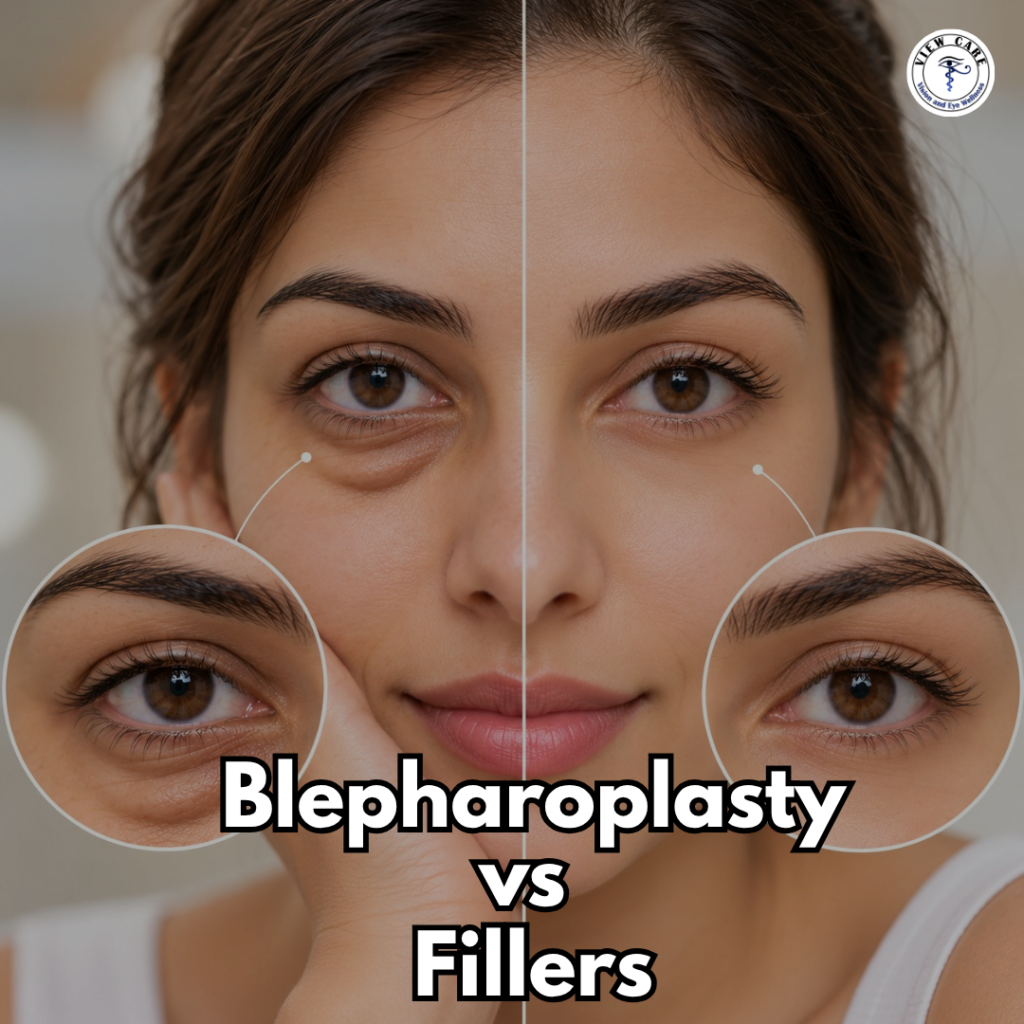
Under-eye bags can make your face look tired, even when you get enough sleep. But the right treatment depends on what is causing them. Lower eyelid blepharoplasty is a surgical procedure that can address prominent fat pockets and excess skin, while under-eye fillers restore volume to hollow areas. Understanding the difference can help you discuss the most suitable option with a qualified specialist.
What Causes Under-Eye Bags?
Under-eye bags commonly develop as the tissues supporting the eyelids weaken with age. Fat that normally cushions the eyes may move forward, creating visible puffiness. Loose skin and fluid retention can also contribute.
Genetics, allergies and lifestyle factors may make under-eye puffiness more noticeable. In some people, the main concern is not a true eye bag but a hollow beneath the eyes that creates shadows.
These concerns can look similar but require different approaches. Identifying the underlying cause is the first step towards choosing an appropriate under-eye bag treatment.
Also Read: Could Tuberculosis Affect Your Eyes? Understanding Ocular Tuberculosis
What Is Blepharoplasty?
Lower eyelid blepharoplasty is an eyelid surgery used to improve under-eye bags, excess skin and certain age-related changes around the lower eyelids.
During the procedure, a qualified surgeon may remove or reposition excess fat and, when necessary, address loose skin. The technique depends on the individual’s eyelid anatomy and treatment goals.
Who may benefit from blepharoplasty? It may be considered for people who have:
1. Prominent under-eye bags caused by protruding fat.
2. Loose or excess skin beneath the eyes.
3. Persistent puffiness that does not improve with lifestyle changes.
4. A combination of under-eye bags and age-related skin changes.
Benefits and limitations
Blepharoplasty can provide longer-lasting improvement in suitable candidates because it addresses the underlying tissue contributing to the bags.
However, it is a surgical procedure and involves recovery time. Temporary swelling, bruising, discomfort, dry eyes and blurred vision may occur. Less common but serious complications include infection, bleeding, eyelid-position changes and vision-threatening problems.
Surgery does not stop the natural ageing process, and results vary from person to person.
Also Read: Can Vitiligo Affect Your Eyes? Learn the Facts, Risks, & Treatments
What Are Under-Eye Fillers?
Under-eye fillers are injectable treatments designed to restore volume beneath the eyes. They may be considered when hollowness in the tear trough—the area between the lower eyelid and upper cheek—creates shadows or makes the eyes appear sunken.
By adding carefully placed volume, fillers may create a smoother transition between the lower eyelid and cheek.
Who may benefit from under-eye fillers? Fillers may be suitable for selected individuals with:
1. Noticeable hollows beneath the eyes.
2. Shadows caused by volume loss.
3. Mild contour irregularities that can be improved with added volume.
4. Little or no significant excess skin or prominent fat-related puffiness.
Benefits and limitations
Fillers do not require surgical incisions and generally involve less initial downtime than surgery. However, results are temporary, and repeat treatment may be required.
Fillers cannot remove excess skin or eliminate protruding fat pockets. In some people, they may increase puffiness or create an uneven appearance.
Possible complications include swelling, bruising, lumps and asymmetry. Rarely, accidental injection into a blood vessel can cause serious tissue damage or vision loss. Treatment around the eyes requires detailed anatomical knowledge and appropriate medical expertise.
Blepharoplasty vs Fillers: Key Differences
Feature | Blepharoplasty | Under-Eye Fillers |
Treatment type | Surgical procedure | Injectable treatment |
Main purpose | Addresses protruding fat and selected cases of excess skin | Restores volume to hollow areas |
Best suited for | Prominent eye bags or loose lower eyelid skin in suitable candidates | Tear trough hollows and volume loss |
Incisions | May involve an incision inside the lower eyelid or near the lash line | No surgical incision |
Recovery | Requires a surgical recovery period | Usually less initial downtime |
Results | Generally longer-lasting, although ageing continues | Temporary |
Main limitation | Surgical risks and recovery | Does not remove fat or excess skin |
The key difference: surgery addresses tissue contributing to under-eye bags, while fillers address a lack of volume. Neither treatment is the right choice for everyone.
Which Treatment Is Better for Your Under-Eye Bags?
1. If your main concern is puffiness
If you have prominent bags caused by fat protruding beneath the lower eyelids, blepharoplasty may be more appropriate. Adding volume with fillers may not improve this concern and can sometimes make the area look heavier.
2. If your under-eyes look hollow
If your under-eye area appears sunken and creates shadows, fillers may be considered after a professional assessment. The goal is to improve the contour rather than remove tissue.
3. If you have both bags and hollows
Some people have protruding fat above a hollow area. This combination requires careful evaluation because treating only the hollow may not address the puffiness.
A specialist can assess the relationship between the lower eyelid and cheek and explain which approach, if any, is suitable.
4. If you have loose skin
Fillers cannot remove excess skin. When skin laxity is a major concern, a surgical consultation may help determine whether blepharoplasty is appropriate.
Can You Reduce Under-Eye Bags Without Surgery?
Not every case of under-eye puffiness requires a cosmetic procedure. If fluid retention, allergies or inadequate sleep contribute to the problem, simple measures may help. You can consider:
1. Applying a clean, cool compress to the area.
2. Getting adequate sleep.
3. Reducing excess salt if fluid retention is a concern.
4. Managing allergies with appropriate medical advice.
5. Avoiding smoking.
These measures may improve temporary puffiness but are unlikely to remove established fat-related eye bags or significant excess skin.
How Do You Choose the Right Treatment?
Before choosing blepharoplasty or under-eye fillers, it is important to understand the cause of your concern. A qualified eye specialist with appropriate eyelid expertise can assess your lower eyelids, skin laxity, fat position, tear trough depth and overall eye health. During the consultation, discuss:
Which treatment is suitable for your anatomy.
The expected benefits and limitations.
Recovery time and possible complications.
Whether a non-surgical approach is likely to meet your goals.
The experience and qualifications of the treating professional.
At View Care Eye Hospital, patients can seek an eye evaluation and discuss concerns involving the eyelids and surrounding eye area. Treatment recommendations should be individualised following an appropriate assessment.
When Should You Seek Medical Advice?
Conclusion
Choosing between blepharoplasty and fillers depends on whether your concern is caused by prominent fat, excess skin or hollowness beneath the eyes.
Blepharoplasty may be appropriate for selected cases of prominent eye bags, while fillers may help improve under-eye hollows. A professional assessment can help you understand your options, their risks and the results you can reasonably expect.
Frequently Asked Questions
Is blepharoplasty better than fillers for under-eye bags?
Blepharoplasty may be more suitable for prominent fat-related bags or excess skin. Fillers may help when hollowness is the main concern. The choice depends on your anatomy.
Can under-eye fillers remove eye bags permanently?
No. Fillers add volume to selected areas and provide temporary results. They do not remove protruding fat or excess skin.
How long do under-eye fillers last?
The duration varies depending on the product used, the treatment area and individual factors. Your clinician can explain the expected duration and follow-up requirements.
Is lower eyelid blepharoplasty permanent?
The changes can be long-lasting, but natural ageing continues. Results and their duration vary between individuals.
Are under-eye fillers safe?
They carry risks, including swelling, bruising, lumps and asymmetry. Rare vascular complications can cause serious tissue damage or vision loss. Treatment should be performed by a suitably qualified professional experienced in the under-eye area.
Which specialist should I consult for under-eye bags?
Consider consulting an ophthalmologist with appropriate oculoplastic expertise or another suitably qualified specialist experienced in eyelid procedures and under-eye treatments.