

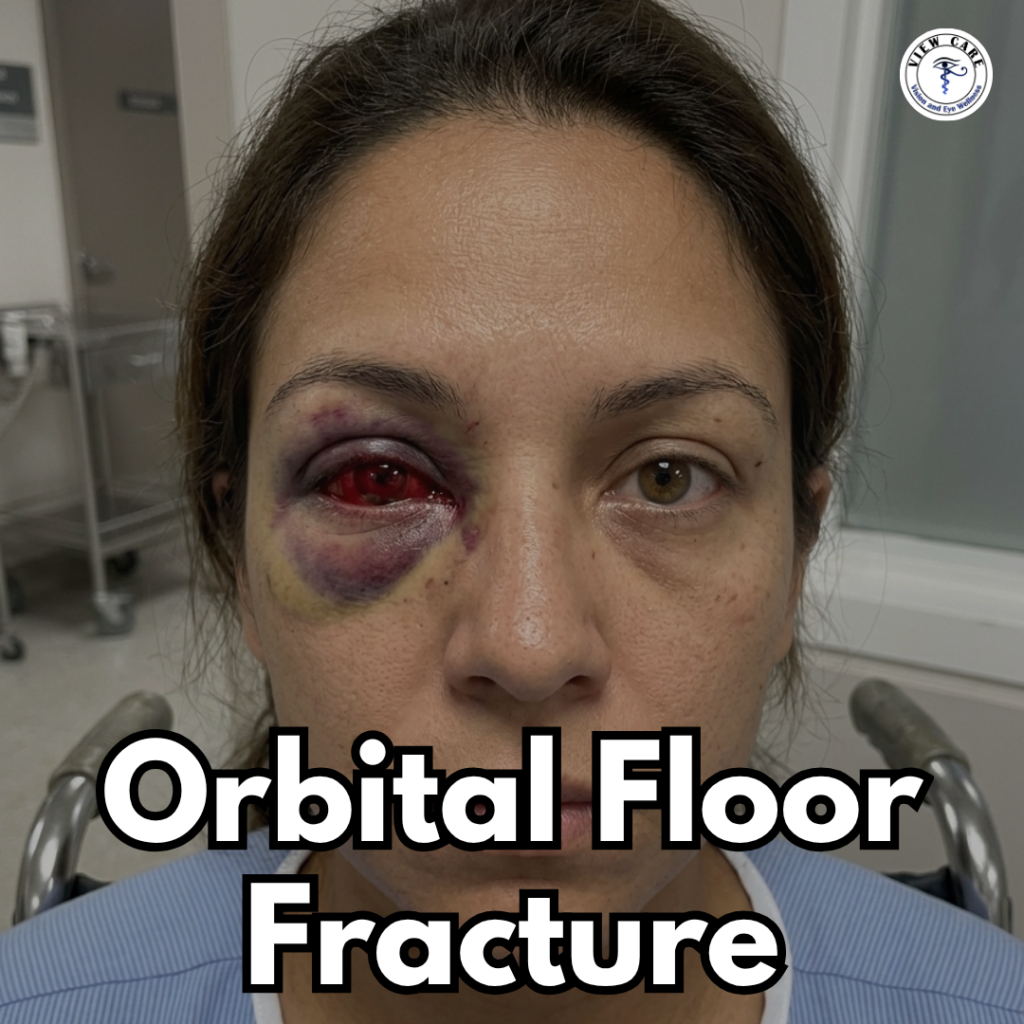
What Is an Orbital Floor Fracture and How Is It Treated?
Introduction
Have you ever heard of someone getting hit near the eye and later complaining of double vision or a sunken eye? That could be something called an orbital floor fracture. While the name sounds complicated, the concept is easier to understand than it seems.
The orbit is the bony socket that holds your eye. The “floor” of this socket is quite thin and can break when there is trauma to the face. This type of injury is commonly seen after accidents, sports injuries, or even physical assaults.
Understanding this condition is important because early diagnosis and treatment by an eye specialist or ophthalmologist can prevent long-term complications.
What Exactly Is an Orbital Floor Fracture?
An orbital floor fracture happens when the bottom part of the eye socket breaks due to a sudden impact. This is sometimes called a “blowout fracture.”
Instead of the eye itself getting damaged, the force gets transferred to the surrounding bone, causing it to crack or break.
Think of it like this:
Your eye is protected by a bony frame. When that frame absorbs too much force, the weakest part (the floor) gives way.
Why Does This Matter?
The orbital floor sits just above your sinus (air-filled space). When it breaks:
Eye muscles can get trapped
-Fat around the eye may slip downward
-Eye movement can become restricted
This is why visiting an eye doctor or eye hospital in Delhi quickly is crucial.
Causes of Orbital Floor Fracture
This condition is usually caused by direct trauma to the face. Some common causes include:
1. Road Traffic Accidents
A major contributor, especially in urban areas like Delhi.
2. Sports Injuries
Cricket balls, football collisions, or even gym accidents.
3. Physical Assault
Blunt force injuries to the eye area.
4. Falls
Particularly common in children and elderly individuals.
Risk Factors
Some people are more likely to experience this injury:
· People involved in contact sports
· Two-wheeler riders without helmets
· Workers in construction or heavy industries
· Elderly individuals prone to falls
· Children during active play
If you fall into any of these categories, regular eye checkup and awareness are important.
Symptoms You Should Not Ignore
Orbital floor fractures don’t always show obvious signs immediately. Here are key symptoms:
1. Double Vision (Diplopia)
You may see two images instead of one.
2. Pain Around the Eye
Especially when trying to move your eye.
3. Swelling and Bruising
Often called a “black eye.”
4. Numbness
Loss of sensation in the cheek or upper lip.
5. Sunken Eye (Enophthalmos)
The eye may appear pushed inward.
Signs That Doctors Look For
When you visit an eye clinic or eye hospital Delhi, doctors check for:
- Restricted eye movement
- Unequal eye position
- Sensory loss in the face
- Visible deformity
An imaging test like a CT scan is usually done for confirmation.
When Should You Seek Help?
This is where many people delay—and that’s risky.
You should visit an eye specialist near me or best eye hospital in Delhi immediately if:
- You experience double vision
- Your eye movement feels restricted
- There is severe swelling or pain
- You feel numbness in your face
- The eye looks sunken or displaced
Early treatment makes a big difference.
Diagnosis: What to Expect
At a reputed eye hospital in Delhi like View Care, diagnosis typically includes:
1. Physical Examination
Checking eye movement and alignment.
2. Vision Testing
Basic eye test to assess clarity.
3. CT Scan
This confirms the fracture and its severity.
Treatment Options
Treatment depends on how severe the fracture is.
1. Non-Surgical Treatment
For mild cases:
- Rest and observation
- Cold compress to reduce swelling
- Avoid blowing your nose
- Medications for pain and swelling
Many patients recover without surgery.
2. Surgical Treatment
Surgery is recommended if:
- Eye muscles are trapped
- Double vision persists
- Eye position is affected
The procedure involves repairing the fracture and restoring normal anatomy.
Always choose an experienced ophthalmologist or eye specialist Delhi for such procedures.
Recovery Process
Recovery varies from person to person:
- Mild cases: 2–4 weeks
- Surgical cases: 4–8 weeks
Follow-ups at a trusted eye clinic are essential to monitor healing.
Possible Complications
Ignoring an orbital fracture can lead to:
- Permanent double vision
- Sunken eye appearance
- Chronic pain
- Facial numbness
- Vision problems
This is why timely consultation at a top eye doctor near me is critical.
Prevention Tips
While accidents can’t always be avoided, you can reduce risks:
- Wear helmets while riding
- Use protective gear in sports
- Be cautious on slippery surfaces
- Ensure regular eye checkup
Success Story 1: Back to Normal Life
Rohit, a 32-year-old professional from Laxmi Nagar, suffered a facial injury during a bike accident. He experienced double vision and swelling.
He visited an eye specialist Laxmi Nagar, where a fracture was diagnosed. After timely surgery at View Care Eye Hospital, his vision returned to normal within weeks.
Today, he is back to work with no complications.
Success Story 2: A Young Athlete’s Comeback
A 19-year-old cricket player from Mayur Vihar Phase 1 was hit by a ball during practice. He ignored symptoms initially, thinking it was minor.
But when double vision started, he consulted an eye specialist Mayur Vihar Phase 1. Early diagnosis and treatment helped him recover without surgery.
He returned to the field within a month.
Why Choosing the Right Eye Hospital Matters
Not all eye injuries are simple. Orbital fractures need:
Choosing the best eye hospital in Delhi ensures better outcomes.
Clinics like View Care provide complete care—from eye test to advanced treatment.
Conclusion
An orbital floor fracture may sound serious—and it is—but with timely care, recovery is highly successful.
The key is awareness. If you or someone you know experiences facial trauma with eye symptoms, don’t ignore it.
Consult an experienced eye doctor, get a proper eye checkup, and ensure the right treatment at a trusted eye hospital Delhi.
Your vision is too valuable to risk.