

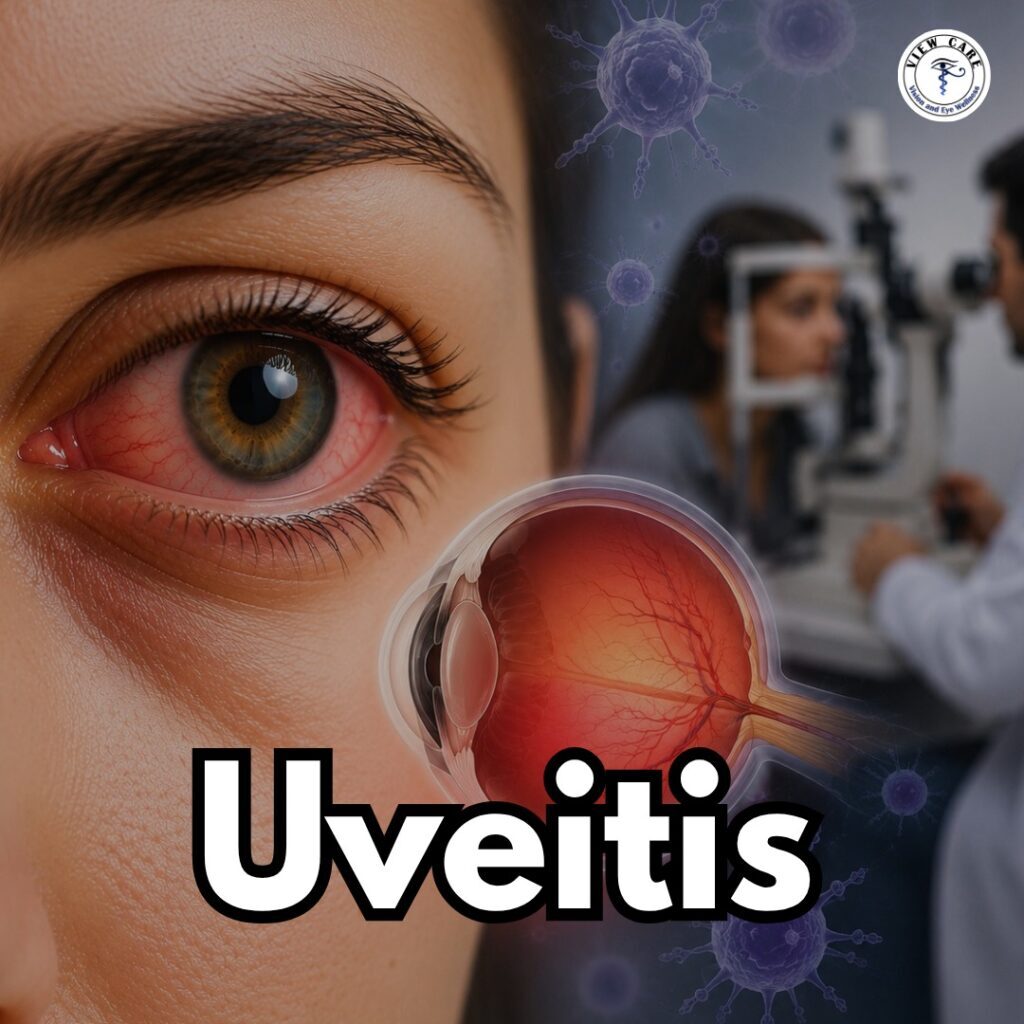
What Is Uveitis and Why Is It Considered a Serious Eye Problem?
Have you ever experienced sudden eye redness, pain, sensitivity to light, or blurry vision and assumed it was just eye strain or allergy? Sometimes, these symptoms may point toward a condition called uveitis, a potentially serious eye inflammation that should never be ignored.
Uveitis can affect people of any age and, if left untreated, may even lead to permanent vision loss. The good news is that with timely diagnosis and proper care from an experienced Ophthalmologist or Eye specialist, most patients recover well and maintain healthy vision.
At VIEW CARE, patients regularly visit with symptoms like redness, pain, floating spots, or blurred vision without realizing that inflammation inside the eye may be the reason.
This article explains uveitis in a simple and easy-to-understand manner so that everyone can recognize the warning signs early and seek help from a trusted VIEW CARE or experienced eye doctor.
What Exactly Is Uveitis?
Uveitis is inflammation inside the eye. The inflammation mainly affects a layer called the uvea, which contains important blood vessels that nourish the eye.
The uvea has three parts:
- Iris — the colored part of the eye
- Ciliary body — helps the eye focus
- Choroid — supplies blood to the retina
When inflammation develops in any of these areas, it is called uveitis.
Depending on which part is affected, uveitis may be:
- Anterior Uveitis
This affects the front part of the eye and is the most common type.
- Intermediate Uveitis
This affects the middle area of the eye.
- Posterior Uveitis
This affects the back portion of the eye near the retina.
- Panuveitis
This is when inflammation affects the entire eye.
Why Does Uveitis Happen?
Many people are surprised to learn that uveitis may not always start from the eye itself. Sometimes, it develops because of infections, immune system problems, or underlying health conditions.
In some cases, the exact cause is never identified.
What Are the Common Causes of Uveitis?
Autoimmune Diseases
Sometimes the body’s immune system mistakenly attacks healthy tissues, including the eyes.
Conditions linked with uveitis include:
- Rheumatoid arthritis
- Ankylosing spondylitis
- Psoriasis
- Lupus
- Crohn’s disease
Infections
Certain infections may trigger eye inflammation, such as:
- Tuberculosis
- Viral infections
- Herpes infection
- Toxoplasmosis
- Fungal infections
Eye Injury
An accident, trauma, or eye surgery may lead to inflammation.
Stress and Weak Immunity
In some patients, repeated episodes are seen during periods of stress or reduced immunity.
Unknown Causes
A significant number of patients never discover an exact reason behind their condition.
Who Is at Higher Risk of Developing Uveitis?
Although anyone can develop uveitis, certain factors increase the risk.
Risk Factors Include:
- Existing autoimmune disease
- Previous eye inflammation
- Smoking
- Weak immune system
- Eye injuries
- Certain infections
- Family history of inflammatory disease
Regular visits to an experienced Eye doctor and timely Eye checkup can help detect inflammation early.
What Are the Symptoms of Uveitis?
The symptoms may appear suddenly or gradually depending on the severity and type.
Common Symptoms Include:
Eye Redness
Persistent redness that does not improve easily.
Eye Pain
Pain may range from mild discomfort to severe aching.
Blurred Vision
Vision may become hazy or cloudy.
Sensitivity to Light
Bright lights may become uncomfortable.
Floaters
Patients may notice tiny floating spots or cobweb-like shadows.
Reduced Vision
In severe cases, vision may decrease significantly.
Watering Eyes
Some patients experience excessive tearing.
What Are the Warning Signs You Should Never Ignore?
You should immediately visit an VIEW CARE or nearby eye clinic if you notice:
- Sudden blurred vision
- Severe redness
- Eye pain
- Light sensitivity
- Sudden increase in floaters
- Partial vision loss
Ignoring these symptoms can increase the risk of permanent damage.
How Is Uveitis Diagnosed?
Proper diagnosis is extremely important because the treatment depends on the underlying cause.
An experienced Ophthalmologist may perform:
Detailed Eye Examination
The doctor checks inflammation inside the eye using special microscopes.
Eye Pressure Check
Inflammation can increase eye pressure.
Retina Examination
The back part of the eye is carefully examined.
Blood Tests
Sometimes tests are needed to identify infections or autoimmune diseases.
Eye Imaging
Advanced scans help evaluate inflammation severity.
At VIEW CARE, modern diagnostic equipment helps in accurate evaluation and personalized treatment planning.
Can Uveitis Lead to Blindness?
Yes, untreated uveitis can become dangerous.
When inflammation continues for a long time, it may damage delicate eye structures permanently.
That is why timely consultation with an experienced Eye specialist is extremely important.
What Are the Possible Complications of Uveitis?
Cataract
Inflammation or long-term steroid use may lead to cataract formation.
Glaucoma
Eye pressure may rise and damage the optic nerve.
Retinal Swelling
Fluid accumulation may affect central vision.
Retinal Damage
Posterior uveitis may damage the retina permanently.
Vision Loss
Delayed treatment can cause irreversible blindness.
Regular Eye test and follow-up appointments help reduce these risks.
What Is the Treatment for Uveitis?
Treatment depends on the cause, severity, and affected area.
Eye Drops
Anti-inflammatory eye drops are commonly prescribed for mild cases.
Steroid Medicines
Steroids help control inflammation quickly.
These may be given as:
- Eye drops
- Tablets
- Injections
Immunity-Control Medicines
In severe or repeated cases, medicines that control the immune system may be needed.
Antibiotics or Antiviral Medicines
If infection is responsible, specific medicines are used.
Surgery
Rarely, surgery may be required to treat complications like cataract or retinal problems.
Why Is Self-Medication Dangerous?
Many people buy eye drops from medical stores without consulting an eye doctor.
This can be risky because:
- Some drops worsen infection
- Steroid misuse may increase eye pressure
- Symptoms may temporarily reduce while damage continues silently
Always seek guidance from a qualified Eye specialist before using any eye medication.
How Long Does Recovery Take?
Recovery depends on:
- The type of uveitis
- How early treatment begins
- The patient’s overall health
- Whether complications are present
Some patients recover within weeks, while others may need long-term monitoring.
Regular follow-up at a trusted VIEW CARE or eye clinic is essential.
Can Uveitis Come Back Again?
Unfortunately, yes.
Some patients experience repeated flare-ups over time.
However, early diagnosis, regular monitoring, and proper medication can significantly reduce recurrence.
Lifestyle care also matters.
Tips to Protect Your Eyes During Recovery
Do Not Ignore Follow-Ups
Even if symptoms improve, continue scheduled visits.
Avoid Smoking
Smoking increases inflammation risk.
Wear Sunglasses
This helps reduce light sensitivity.
Manage Systemic Diseases
Control diabetes, arthritis, and autoimmune conditions properly.
Maintain Hygiene
Avoid touching eyes frequently.
Get Regular Eye Checkups
Routine eye care is important for long-term vision health.
Real-Life Success Story 1: A Young Professional Saved Her Vision
Riya, a 29-year-old IT professional from Delhi, developed redness and blurred vision in one eye. Initially, she thought it was because of excessive screen time and delayed treatment for several days.
When her symptoms worsened, she visited VIEW CARE for a detailed examination. She was diagnosed with anterior uveitis.
After timely treatment with medications and regular follow-ups, her inflammation settled completely, and her vision returned to normal.
Today, she continues routine Eye checkup visits and has remained symptom-free.
Real-Life Success Story 2: Early Detection Prevented Serious Damage
Mr. Sharma, a 52-year-old businessman, experienced floaters and mild vision distortion. He visited an experienced Eye doctor for evaluation.
Tests revealed posterior uveitis linked to an underlying infection.
Because the diagnosis was made early, treatment was started immediately. His retinal swelling reduced significantly, and permanent damage was prevented.
He now encourages everyone not to ignore even minor vision changes.
When Should You Visit an Eye Specialist Immediately?
Seek urgent medical help if you experience:
- Sudden vision loss
- Severe eye pain
- Flashing lights
- Extreme redness
- Increasing floaters
- Persistent blurred vision
Delaying treatment may increase the risk of irreversible complications.
If you are searching online for:
- “Best eye specialist near me”
- “Top 5 eye doctor near me”
- “Eye specialist Delhi”
- “Eye specialist Laxmi Nagar”
- “Eye specialist Mayur Vihar Phase 1”
- “Eye hospital Delhi”
Always choose a qualified and experienced Ophthalmologist with proper diagnostic facilities.
Why Regular Eye Checkups Matter Even Without Symptoms
Some forms of uveitis progress silently.
Patients may not notice major symptoms initially, but inflammation may continue damaging the retina or optic nerve.
Routine Eye test and comprehensive eye examinations can detect problems early before vision is affected.
This is especially important for:
- Diabetic patients
- Autoimmune disease patients
- Elderly individuals
- People with repeated eye redness
Final Thoughts: Should You Ignore Eye Redness or Blurred Vision?
Absolutely not.
Uveitis is a potentially serious eye condition, but early diagnosis and treatment can protect your eyesight successfully.
If you experience persistent redness, pain, floaters, or blurry vision, do not rely on home remedies or random eye drops.
Consult an experienced Eye specialist or visit a trusted VIEW CARE for a proper evaluation.
Healthy vision depends on timely action, regular eye care, and expert guidance.