

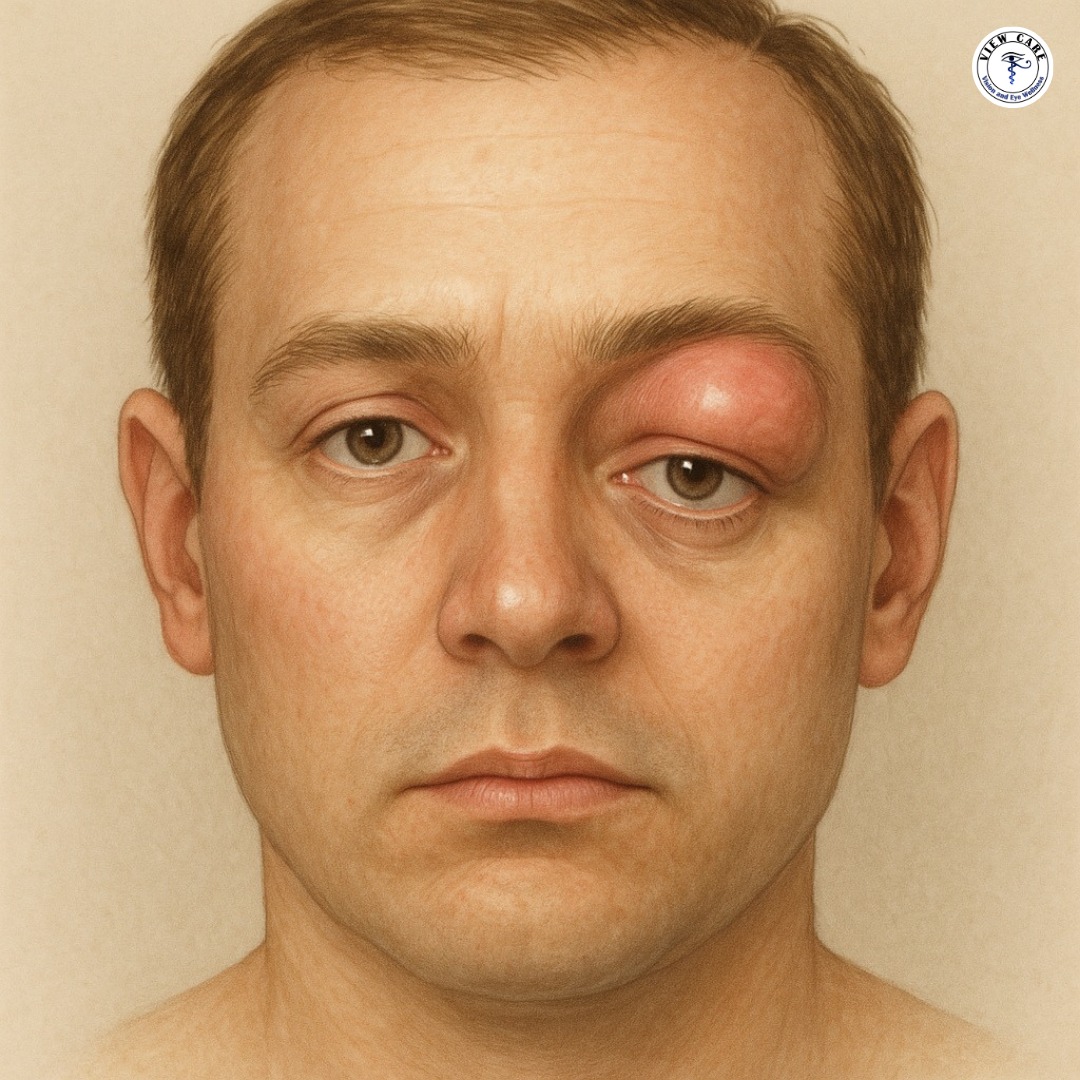
Have you noticed a swelling near the upper corner of your eye or experienced eye pressure that just doesn’t feel right? While it may sound rare, one possible cause is a lacrimal gland tumor.
In this blog, we’ll walk you through everything you need to know — in simple terms — about lacrimal gland tumors, including what they are, signs to watch out for, treatment options, and when to visit your eye specialist. Plus, we’ll share real-life success stories to give you hope.
 What Is the Lacrimal Gland?
The lacrimal gland is a tiny gland situated just above the outer edge of your upper eyelid. Its main job is to produce tears that keep your eyes moist and comfortable.
 What Is a Lacrimal Gland Tumor?
A lacrimal gland tumor is an unusual growth that develops in or near the tear-producing gland above your eye. It can be:
- Benign (non-cancerous)– slow-growing, usually harmless
- Malignant (cancerous)– fast-growing, potentially life-threatening
 What Are the Risk Factors?
While anyone can develop a lacrimal gland tumor, certain factors may increase the risk:
- Age: Middle-aged adults are more commonly affected.
- Genetics: Family history of eye or head tumors.
- Radiation exposure: Previous radiation therapy to the head or face.
- Immune system issues: Some autoimmune diseases may play a role.
- Chronic inflammation: Long-term swelling or irritation in the area.
 What Causes a Lacrimal Gland Tumor?
In many cases, the exact cause isn’t known. Some possible contributors include:
- Cell mutation: Abnormal cell changes in the gland.
- Infections or trauma: In rare cases, ongoing inflammation in the area can lead to abnormal tissue growth.
- Genetic mutations: Especially in malignant tumors like adenoid cystic carcinoma.
Also Read: Orbital Tumors: A Patient’s Guide to Detection, Diagnosis, and Treatment
 Common Symptoms to Watch Out For
Most people don’t think of tumors when they have eye discomfort. But if you notice any of the following, it’s time to book an eye checkup:
- A painless lump or swelling near the upper outer eyelid
- Drooping of the upper eyelid
- Eye bulging (proptosis)
- Double vision or blurred vision
- Eye pressure or discomfort
- Eye not moving as freely as usual
- Pain behind or around the eye (especially in cancerous cases)
 How Is It Diagnosed?
When you visit an eye specialist or ophthalmologist, the following steps are usually taken:
- Detailed eye examination– Using specialized lenses and tools.
- Imaging tests– CT scan or MRI helps visualize the tumor.
- Biopsy– A small tissue sample is taken to check if the tumor is benign or malignant.
 Where Should You Go for Diagnosis?
If you’re in Delhi, it’s important to visit a reputed eye hospital. At View Care Eye Hospital, located near Mayur Vihar Phase 1, we offer advanced diagnosis and treatment for such rare conditions.
We’re known for our compassionate care, accurate testing, and advanced surgical facilities — no wonder patients call us the best eye hospital in Delhi!
 What Are the Treatment Options?
Treatment depends on whether the tumor is benign or malignant:
 For Benign Tumors:
- Surgical removal: The tumor is carefully taken out without damaging the eye.
- Follow-up: Regular eye checkups are needed to ensure it doesn’t return.
For Malignant Tumors:
- Surgery: A more extensive removal may be needed.
- Radiation therapy: Used to kill leftover cancer cells.
- Chemotherapy: In rare cases, if the cancer spreads.
- Reconstruction: Cosmetic or functional surgery may follow.
Also Read: Could Eye Cancer Be Hiding in Plain Sight? Know the Signs, Risks & Treatments
 Real-Life Happy Patient Stories
1. Mrs. Jyoti – 52 Years Old, Saket
Mrs. Jyoti came to View Care Eye Hospital after noticing a swelling above his left eye for 2 months. A CT scan showed a progressive lacrimal gland tumor.
Our eye specialist in Mayur Vihar Phase 1 performed a successful tumor removal surgery. Mrs. Jyoti was back to work within 4 days and says:
“I thought it was just puffiness, but I’m glad I didn’t ignore it. Thanks to Dr. Gaurav Garg and his team, I feel normal again!”
2. Mrs. Zubeida – 65 Years Old, Meerut
Mrs. Zubeida had eye pain and mild swelling that didn’t go away for weeks. Her MRI confirmed a progressive tumor in the lacrimal gland.
She underwent surgery followed by radiation at our eye clinic in Delhi. Today, she’s cancer-free and lives a normal life.
“I was scared, but the doctors at View Care explained everything in simple words. Their support gave me strength.”
 When Should You Visit an Eye Specialist?
Don’t wait for pain to tell you something’s wrong.
 Visit an eye doctor near you if:
- You see a lump or swelling near your eye
- You have vision changes or eye discomfort
- Your eye looks different or feels “pushed out”
- Any eye problem persists for more than 7 days
If you live near Mayur Vihar Phase 1, Laxmi Nagar, or surrounding areas, View Care is just a short drive away.
 What Happens If You Ignore It?
Delaying treatment can lead to:
- Spread of cancer (in malignant tumors)
- Permanent vision damage
- Deformity or eye misalignment
- Severe eye pain or pressure
- Possible removal of the eye in advanced cases
Early treatment = Better outcomes. Period.
 Your Trusted Eye Partner in Delhi
At View Care Eye Hospital, we’re committed to providing expert care with a human touch.
Whether you need a routine eye test, urgent care, or tumor evaluation, our team of trained ophthalmologists and friendly staff are here for you.
Why choose us?
- Modern facilities
- Highly experienced doctors
- Transparent care process
- Trusted by families across Delhi
 Conclusion
A lacrimal gland tumor may sound scary, but with the right care and timely action, it can be treated effectively. Keep an eye on your eyes — they often speak before your body does.
Don’t wait for discomfort to worsen. Visit your nearest eye specialist for an eye checkup today.
Book Your Eye Test at View Care Today! Call us or visit our website to schedule an appointment.