

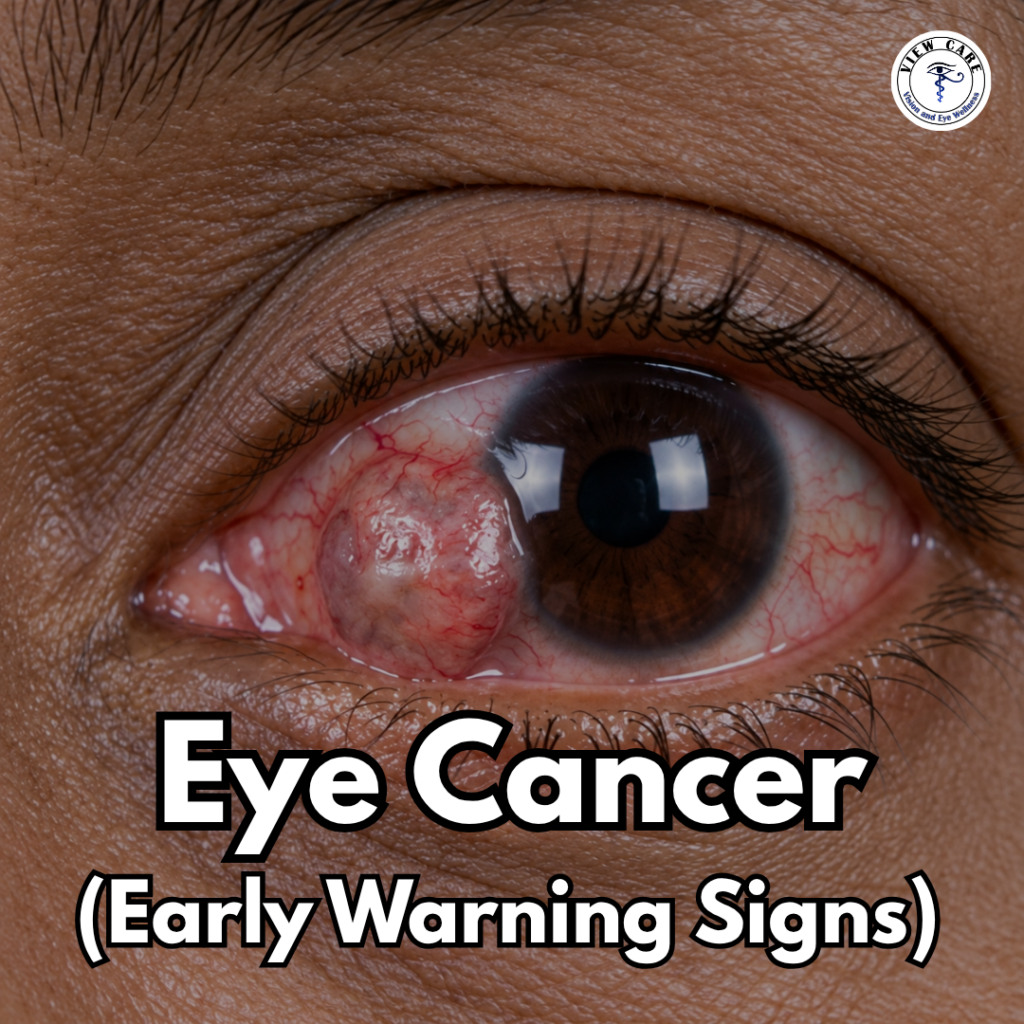
Eye cancer is rare, and many eye changes are caused by conditions that are not cancer. However, changes in vision, a growing dark spot on the eye, new floaters or flashes, changes in the pupil, or a change in the appearance or movement of the eye should not be ignored. An ophthalmologist can examine the eye and determine whether further testing is needed.
What Is Eye Cancer?
Eye cancer refers to cancer that starts in or around the eye. In adults, ocular melanoma (intraocular melanoma) is the most common primary cancer of the eye, although it is still uncommon. In children, the most common primary eye cancer is retinoblastoma, which develops in the retina.
Eye cancer can develop in different parts of the eye, including the uvea, retina, conjunctiva, eyelids, or tissues around the eye. The symptoms can vary depending on where the tumor develops.
Importantly, some eye cancers may not cause noticeable symptoms in their early stages and may be detected during a routine eye examination.
What Are the Early Warning Signs of Eye Cancer?
The signs of eye cancer can be subtle. Some important changes to watch for include:
1. Changes in Vision
New or unexplained changes in vision may include:
· Blurred vision
· Distorted vision
· Loss of part of the visual field
· Sudden or unexplained reduction in vision
Vision changes have many possible causes and do not automatically mean cancer. However, persistent or unexplained changes should be evaluated by an eye specialist.
2. New Floaters or Flashes
Seeing new floaters, spots, or squiggly lines, or experiencing flashes of light can sometimes occur with conditions other than cancer. However, new or unusual symptoms should be checked, particularly if they are persistent or associated with changes in vision.
3. A Growing Dark Spot on the Eye
A dark spot on the coloured part of the eye, called the iris, can sometimes be a benign mole or nevus. However, if a pigmented spot is changing or getting larger, it should be examined by an ophthalmologist.
A new or changing dark area on the white part of the eye should also be assessed.
4. Changes in the Pupil
A change in the size or shape of the pupil can sometimes be associated with an eye problem, including certain eye tumors. It should be evaluated rather than assumed to be harmless.
5. Change in the Position or Movement of the Eye
A tumor involving the eye or surrounding tissues can sometimes cause the eye to appear displaced, bulge outward, or move differently. These changes require medical assessment.
6. Changes in How the Eye Looks or Feels
Unusual redness, swelling, a visible growth, or another persistent change in the appearance of the eye should be checked by an eye doctor.
Pain is not a typical early symptom of ocular melanoma and is uncommon unless the tumor has grown extensively outside the eye.
Also Read: Could Tuberculosis Affect Your Eyes? Understanding Ocular Tuberculosis
Eye Cancer in Children: An Important Warning Sign
Eye cancer can also occur in children. Retinoblastoma is a rare cancer that develops in the retina and is most common in children younger than 5 years.
One of the most important warning signs is a white-looking pupil, particularly when it appears in photographs taken with a flash. This is called leukocoria.
Other possible signs include:
· Crossed or misaligned eyes
· Poor vision
· Eye swelling
· Redness
· Watery eyes
· Eye pain
If parents notice a white pupil or an unusual change in a child’s eye, the child should be evaluated promptly by an ophthalmologist.
Does a Dark Spot Mean Eye Cancer?
Not necessarily.
A dark spot or pigmented area on the eye can have several causes, and many are not cancerous. However, a spot that is new, growing, changing in appearance, or associated with other eye symptoms deserves an examination.
An ophthalmologist can examine the lesion and determine whether it needs monitoring, further investigation, or treatment.
How Is Eye Cancer Diagnosed?
If an eye specialist suspects an eye tumor, the first step is usually a detailed eye examination.
Depending on the findings, the examination may include:
· Vision testing
· Examination of the front and back of the eye
· Dilated eye examination
· Slit-lamp examination
· Eye movement assessment
· Evaluation of the pupils
· Retinal imaging
· Ultrasound of the eye
· Other imaging tests when required
Not everyone needs every test. The investigations depend on the suspected condition, symptoms, examination findings, age, and overall health.
Also Read: Can Vitiligo Affect Your Eyes? Learn the Facts, Risks, & Treatments
Can Eye Cancer Be Detected Early?
There is currently no widely recommended routine screening test for eye cancer in people at average risk. However, some eye cancers can be detected during routine eye examinations, even before obvious symptoms develop.
This is one reason regular comprehensive eye examinations remain important, particularly when there are new or unexplained changes in the eyes.
People with certain inherited conditions or a strong relevant family history may need more frequent monitoring as advised by their doctor.
When Should You See an Eye Specialist?
You should arrange an eye examination if you notice:
· A new or persistent change in vision
· New floaters or flashes
· A growing dark spot on the iris or eye surface
· A change in pupil size or shape
· Bulging or displacement of the eye
· A change in how the eye moves
· An unusual growth or persistent change in the appearance of the eye
Sudden vision loss, a sudden increase in floaters or flashes, or a new dark curtain or shadow in your vision requires urgent eye assessment, because these symptoms can also indicate other serious eye conditions.
Remember, these symptoms do not mean that you have eye cancer. Many common and less serious eye conditions can cause similar symptoms. The purpose of an examination is to identify the actual cause.
A Typical Treatment Journey
A person may notice a new dark spot on the coloured part of the eye and assume it is harmless. If the spot appears to be changing, an ophthalmologist may examine it carefully, document its appearance, and decide whether monitoring or additional testing is appropriate.
If further evaluation suggests a tumor, additional imaging or specialist assessment may be arranged.
This is an illustrative treatment journey and not a specific View Care patient case.
The Bottom Line
Frequently Asked Questions
1. What are the early warning signs of eye cancer?
Possible warning signs include unexplained vision changes, new floaters or flashes, a growing dark spot on the eye, pupil changes, bulging of the eye, or changes in eye movement.
2. Is eye cancer common?
No. Eye cancer is uncommon. Ocular melanoma is the most common primary eye cancer in adults, while retinoblastoma is the most common primary eye cancer in children.
3. Does eye cancer cause pain?
Pain is not usually an early symptom of ocular melanoma. Pain can occur in some cases, particularly when a tumor has grown extensively or when other problems develop.
4. Can a dark spot on the eye be cancer?
A dark spot can have many causes and is not necessarily cancer. However, a spot that is new or growing should be examined by an ophthalmologist.
5. What does a white pupil in a child mean?
A white-looking pupil, especially in flash photographs, can be a sign of retinoblastoma. It can also have other causes, so prompt examination by an eye specialist is important.
6. Can a routine eye examination detect eye cancer?
Some eye cancers can be detected during a routine eye examination, even when a person has no obvious symptoms. However, there is no widely recommended eye-cancer screening test for people at average risk.
7. Who should I see if I am worried about eye cancer?
An ophthalmologist can perform a detailed eye examination and determine whether additional tests or referral to an ocular oncology specialist is needed.
8. Are floaters always a sign of eye cancer?
No. Floaters are common and can occur for many reasons. However, new or unusual floaters, particularly when accompanied by flashes or vision changes, should be evaluated.