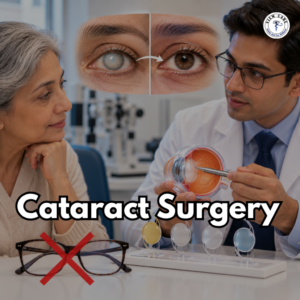
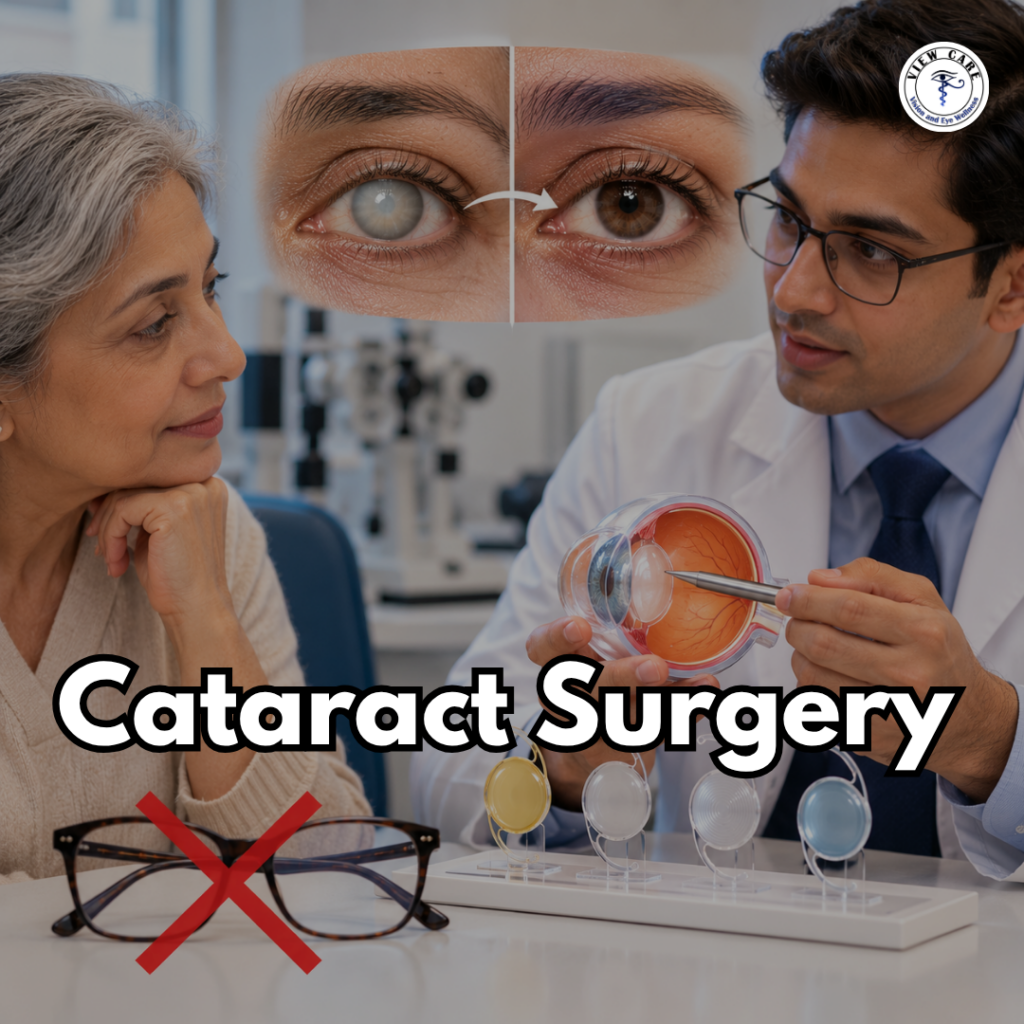
Can you stop wearing glasses after cataract surgery? Yes, some people can significantly reduce their dependence on glasses with the right intraocular lens (IOL), but completely avoiding glasses is not guaranteed. Premium IOLs can help improve vision at different distances, depending on the lens type and your eye health. An eye specialist can help you understand which lens best suits your vision needs and lifestyle.
What Is an IOL in Cataract Surgery?
A cataract develops when the natural lens inside the eye becomes cloudy, causing blurred vision, glare and difficulty seeing clearly. During cataract surgery, the cloudy lens is removed and replaced with an artificial lens called an intraocular lens (IOL).
The type of IOL you choose can influence how clearly you see at different distances and whether you need glasses for reading, computer work or driving.
Also Read: Could Tuberculosis Affect Your Eyes? Understanding Ocular Tuberculosis
What Are Premium IOLs?
Premium IOLs are specialised artificial lenses designed to address specific vision needs. Some can correct astigmatism, while others are designed to provide a wider range of vision and reduce dependence on glasses.
The main options include:
1. Monofocal IOLs
Monofocal lenses provide clear vision at one primary distance, usually distance vision. You may see distant objects clearly but still need reading glasses for books, mobile phones and other close-up activities.
These lenses remain a suitable choice for many people seeking good distance vision after cataract surgery.
2. Multifocal IOLs
Multifocal lenses are designed to provide vision at more than one distance, commonly near and far, with some designs also supporting intermediate vision.
They may reduce the need for glasses during everyday activities. However, some people experience glare, halos around lights or reduced contrast, particularly in low-light conditions.
3. Trifocal IOLs
Trifocal lenses are designed to provide vision at three main distances:
Near: Reading and using a mobile phone.
Intermediate: Working on a computer or viewing a dashboard.
Distance: Watching television or recognising objects far away.
They may be helpful for people who want greater freedom from glasses for a range of daily activities, although individual results vary.
4. Extended Depth of Focus (EDOF) IOLs
EDOF lenses are designed to provide an extended range of vision, particularly distance and intermediate vision. Depending on the lens design, additional near-vision correction may still be needed.
They may suit people who spend considerable time working on computers or performing other intermediate-distance activities.
5. Toric IOLs
Toric lenses are designed to correct astigmatism, a common condition caused by the shape of the cornea or, less commonly, the lens.
They are available in different IOL designs, including monofocal and certain premium lenses. Correcting astigmatism can improve visual clarity, but a toric lens alone does not necessarily eliminate the need for reading glasses.
Premium IOLs vs Monofocal IOLs: What Is the Difference?
Feature | Monofocal IOL | Premium IOLs |
Main purpose | Clear vision at one distance | Correct specific vision needs or provide a broader range of vision |
Reading glasses | Often needed | May be needed less often, depending on the lens |
Computer vision | Depends on the selected focus | Some designs support intermediate vision |
Astigmatism correction | Standard monofocal lenses do not specifically correct it | Toric options can correct astigmatism |
Night-time vision | Depends on individual visual factors | Some designs may cause glare or halos |
Cost | Generally lower | Usually higher |
The most expensive lens is not automatically the best choice. The right IOL is the one that matches your eye health, visual requirements and expectations.
Can Premium IOLs Make You Completely Glasses-Free?
Premium IOLs can reduce the need for glasses, but glasses-free vision cannot be promised.
Your final vision depends on several factors, including:
The type and power of the IOL.
Your corneal shape and any remaining astigmatism.
The health of your retina and optic nerve.
Existing eye conditions, such as glaucoma or macular disease.
How your eyes heal after surgery.
The visual tasks you perform every day.
Some people may manage most activities without glasses but still need them for small print, prolonged reading or particular tasks. Others may benefit from glasses for clearer vision at certain distances.
Also Read: Can Vitiligo Affect Your Eyes? Learn the Facts, Risks, & Treatments
Who Is a Good Candidate for Premium IOLs?
Premium lenses may be worth discussing if you want to reduce your dependence on glasses after cataract surgery.
They may be considered for people who:
Want to see clearly at more than one distance.
Frequently read, use digital devices or perform activities at different distances.
Have suitable eye health and measurements for the selected lens.
Understand the possible limitations and side effects.
Have realistic expectations about the results.
However, not everyone is a suitable candidate. Conditions affecting the cornea, retina or optic nerve may influence which lens is appropriate. People who frequently drive at night should also discuss possible glare, halos and contrast changes before selecting a multifocal or EDOF lens.
How Do You Choose the Right IOL for Cataract Surgery?
Choosing an IOL involves more than deciding whether you want to wear glasses.
Your eye specialist may assess your eye measurements, corneal shape, astigmatism, retina and overall eye health. Your daily routine, reading habits, computer use, night driving and budget are also important.
Before cataract surgery, ask your surgeon:
Which IOL options are suitable for my eyes?
Will I probably need reading glasses after surgery?
Could the selected lens affect my night vision?
Do I have any eye conditions that may affect the outcome?
What are the expected benefits, limitations and additional costs?
Conclusion
Avoiding glasses after cataract surgery may be possible for some people, particularly with appropriately selected premium IOLs. Multifocal and trifocal lenses can provide vision at multiple distances, EDOF lenses extend the range of focus, and toric lenses correct astigmatism.
However, every lens has benefits and limitations. A detailed eye examination and discussion with your cataract surgeon are essential to choosing an IOL that fits your vision needs, lifestyle and expectations.
Frequently Asked Questions
1. Which IOL is best for avoiding glasses after cataract surgery?
Multifocal and trifocal IOLs may reduce dependence on glasses for near and distance activities. EDOF lenses can support distance and intermediate vision. The best choice depends on your eyes and lifestyle.
2. Will I need reading glasses after cataract surgery?
You may still need reading glasses, particularly with a standard monofocal lens set for distance vision. Some premium lenses can reduce this need, but results vary.
3. Are premium IOLs worth the extra cost?
They may be worthwhile if reducing dependence on glasses is an important priority and your eyes are suitable. Discuss the expected benefits, limitations and cost with your surgeon.
4. Can premium IOLs cause glare at night?
Some multifocal and EDOF lenses can cause glare or halos around lights. Discuss your night-driving habits and visual priorities before choosing a lens.
5. How do I know which IOL is right for me?
An eye examination, detailed eye measurements and a discussion about your daily activities can help your cataract surgeon recommend suitable options.