

Introduction
Summer vacation is a time when children enjoy freedom from homework, exams, and school routines. Unfortunately, it is also the season when screen time often reaches its highest level. Whether it is smartphones, tablets, television, gaming consoles, or laptops, children can spend several hours every day looking at digital screens.
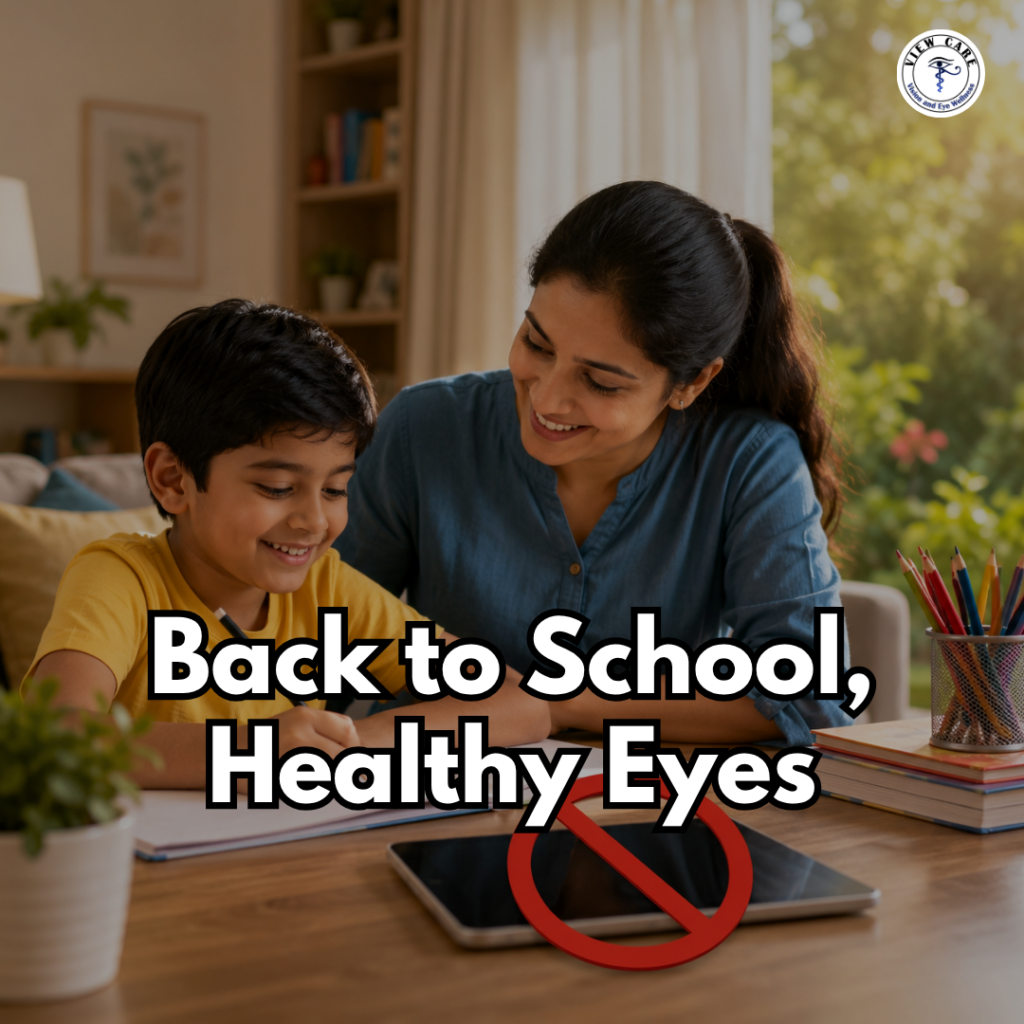
As summer vacation comes to an end, many parents begin preparing their children for school by buying uniforms, books, and stationery. However, one important thing that often gets overlooked is preparing their eyes and reducing screen time before school starts.
A sudden shift from spending 8–10 hours on screens to sitting in a classroom, reading textbooks, and focusing on the blackboard can be difficult for children’s eyes and minds.
This blog explains why reducing screen time gradually is important, how parents can make the transition easier, warning signs to watch for, treatment options if eye problems develop, and when it is time to visit an Eye specialist or Eye doctor.
Why Does Screen Time Increase During Summer Vacation?
During vacations, children usually:
- Wake up later than usual.
- Spend more time indoors because of hot weather.
- Watch cartoons and movies.
- Play online games.
- Attend online hobby classes.
- Chat with friends on mobile phones.
- Browse social media.
- Use tablets for entertainment.
Without proper limits, daily screen time can easily exceed recommended levels.
Why Is It Important to Reduce Screen Time Before School Reopens?
Children returning to school need to:
- Read textbooks comfortably.
- Write for longer periods.
- Focus on classroom teaching.
- Complete homework.
- Sleep on time.
- Wake up early.
If screen habits continue until the last day of vacation, many children experience:
- Difficulty concentrating
- Tired eyes
- Poor sleep
- Morning fatigue
- Headaches
- Irritability
- Reduced classroom attention
Gradually reducing screen time one to two weeks before school starts helps children adjust smoothly.
How Does Too Much Screen Time Affect Children’s Eyes?
Digital screens require continuous focusing. Unlike outdoor activities, screen viewing often causes children to:
- Blink less frequently.
- Keep their eyes fixed in one position.
- Hold devices too close.
- Spend long hours indoors.
Over time, this may lead to eye discomfort and reduced visual comfort.
Causes of Eye Problems Related to Excessive Screen Time
Several habits contribute to eye strain in children.
Holding Devices Too Close
Many children keep phones just a few inches from their face, forcing their eyes to work harder.
Continuous Viewing Without Breaks
Watching videos or gaming for several hours without resting the eyes increases fatigue.
Poor Lighting
Using screens in dim rooms or complete darkness places additional stress on the eyes.
Poor Sitting Posture
Looking down at screens for long periods can also contribute to neck and shoulder discomfort.
Reduced Outdoor Time
Outdoor activities are important for healthy visual development and may help reduce the risk of increasing myopia (short-sightedness) in children.
Risk Factors
Some children are more likely to develop eye discomfort from excessive screen use. These include:
- Existing glasses users
- Children with uncorrected vision problems
- Children who already have dry eyes
- Heavy gamers
- Children attending online classes
- Poor sleep habits
- Family history of myopia
- Limited outdoor activities
Common Symptoms
Parents should watch for:
- Eye strain
- Tired eyes
- Burning sensation
- Dry eyes
- Watering eyes
- Frequent blinking
- Headaches
- Difficulty focusing
- Blurred vision after screen use
- Eye rubbing
- Double vision (occasionally)
- Sensitivity to light
Signs Parents Should Never Ignore
Some signs suggest your child should undergo an Eye checkup. These include:
- Squinting while reading
- Sitting very close to the television
- Holding books extremely close
- Complaining that words become blurry
- Frequent headaches after school
- Closing one eye while reading
- Difficulty seeing the classroom board
- Constant eye rubbing
- Loss of interest in reading
How to Reduce Screen Time Before Summer Vacation Ends
1. Start One to Two Weeks Early
Avoid stopping screens suddenly. Instead:
- Reduce screen time by 30–60 minutes every few days.
- Replace screens with family activities.
2. Bring Back a School Routine
Encourage children to:
- Wake up earlier.
- Eat meals on time.
- Sleep earlier.
- Finish reading before bedtime.
3. Increase Outdoor Play
Outdoor activities help children:
- Relax their eyes.
- Stay physically active.
- Improve sleep quality.
- Reduce dependence on screens.
Aim for at least one to two hours of outdoor play daily, when weather and safety allow.
4. Follow the 20-20-20 Rule
Every 20 minutes:
Look at something about 20 feet away for 20 seconds.
This simple habit relaxes the focusing muscles of the eyes.
5. Encourage Reading Printed Books
Instead of tablets:
- Storybooks
- Coloring books
- Puzzle books
- Activity books
These provide variety while reducing digital exposure.
6. Create Screen-Free Zones
Keep screens away from:
- Dining table
- Bedroom
- Study table before homework
- Family conversations
7. Avoid Screens Before Bedtime
Bright screens can interfere with healthy sleep.
Ideally, stop screen use at least one hour before bedtime.
8. Be a Role Model
Children imitate parents.
If parents constantly use phones, children are likely to do the same.
Family-wide screen rules work much better.
Healthy Alternatives to Screens
Instead of gadgets, children can enjoy:
- Cycling
- Swimming
- Drawing
- Gardening
- Building blocks
- Board games
- Cricket
- Football
- Reading
- Music
- Dance
- Craft activities
- Family walks
Can Screen Time Cause Permanent Eye Damage?
This is one of the most common concerns among parents.
Current evidence suggests that normal screen use does not permanently damage the eyes. However, excessive and prolonged screen use can contribute to symptoms of digital eye strain and may encourage habits associated with the progression of myopia in some children, especially when combined with limited outdoor time. The good news is that these problems often improve when healthy screen habits are adopted.
Treatment Options
Treatment depends on the underlying cause.
An Ophthalmologist or Eye specialist may recommend:
Eye Examination
A complete Eye test checks vision and eye health.
Prescription Glasses
Some children simply need updated spectacles.
Lubricating Eye Drops
If dryness is present, suitable lubricating drops may be advised.
Vision Correction Advice
Children may receive guidance on:
- Reading distance
- Device positioning
- Lighting
- Break schedules
Lifestyle Changes
The most effective treatment often includes:
- Less screen time
- Better sleep
- More outdoor play
- Balanced nutrition
- Regular eye examinations
When Should Parents Seek Help?
Visit an Eye doctor if your child experiences:
- Persistent blurred vision
- Frequent headaches
- Double vision
- Eye pain
- Constant watering
- Red eyes lasting several days
- Difficulty reading
- Poor school performance due to vision
- Sudden vision changes
Early diagnosis helps prevent avoidable vision problems.
Possible Complications if Ignored
Ignoring ongoing symptoms may lead to:
- Chronic eye strain
- Reduced concentration
- Poor academic performance
- Sleep disturbances
- Increased discomfort during reading
- Delayed diagnosis of refractive errors or other eye conditions
Routine eye examinations help identify these problems early.
Tips for Parents Before School Starts
 Reduce screens gradually.
Encourage outdoor play.
Ensure adequate sleep.
Maintain good lighting while reading.
Schedule an Eye checkup if your child has never had one.
Replace entertainment screen time with creative activities.
Follow family screen rules consistently.
Encourage healthy eating.
Success Story 1: Aarav’s Comfortable Return to School
Eight-year-old Aarav spent almost the entire summer playing online games. As school approached, he began complaining of headaches and blurry vision while reading. His parents visited View Care, where a detailed Eye test revealed a mild refractive error. After getting the correct glasses and following healthier screen habits, Aarav returned to school comfortably. Within weeks, his headaches disappeared, and he was able to focus much better in class.
Success Story 2: Meera’s New Healthy Routine
Ten-year-old Meera loved watching videos during her vacation and often stayed up late using a tablet. She developed dry, tired eyes and struggled to concentrate on her homework. After visiting an Eye doctor, her family gradually reduced her screen time, increased outdoor play, and encouraged reading printed books. A few weeks later, her eyes felt more comfortable, her sleep improved, and she became more active and confident in school.
Frequently Asked Questions
How much screen time is reasonable before school starts?
It depends on the child’s age and needs, but recreational screen time should be balanced with outdoor play, reading, sleep, and family activities.
Should children wear blue-light glasses?
For most children, blue-light glasses are not routinely necessary. Healthy screen habits, regular breaks, and appropriate viewing distances generally provide greater benefit.
Can screen time worsen myopia?
Research suggests that prolonged near work and reduced outdoor activity may contribute to myopia progression in some children. Spending more time outdoors may help lower this risk.
How often should children have an eye examination?
Children should have regular eye examinations as advised by their eye care professional, especially if they have glasses, symptoms, or a family history of eye problems.
Conclusion
Preparing children for the new school session involves much more than buying books and uniforms. Their eyes also need time to adjust after weeks of increased digital device use. Gradually reducing screen time, encouraging outdoor play, promoting healthy sleep habits, and watching for signs of eye strain can make the transition back to school much smoother.
If your child experiences blurred vision, headaches, eye discomfort, or difficulty focusing, don’t ignore these symptoms. A timely Eye checkup with an experienced Eye specialist can identify any underlying issue and provide appropriate guidance.
At View Care, our experienced Eye doctor and Ophthalmologist provide comprehensive pediatric eye care, detailed Eye tests, and personalized advice to help children maintain healthy vision. If you are looking for an Eye specialist Delhi, Eye specialist Mayur Vihar Phase 1, Eye specialist Laxmi Nagar, the Best eye hospital in Delhi, an Eye hospital Delhi, or the Best eye specialist near me, our team is committed to delivering trusted, compassionate care for every child. Regular visits to a reliable Eye clinic or Eye hospital in Delhi can help protect your child’s eyesight for years to come.