

Introduction
Imagine suddenly noticing tiny floating dots in your vision. Then you see flashes of light. A few hours later, it feels as though a dark curtain is slowly moving across one side of your vision.
Would you wait and see if it gets better?
You shouldn’t.
These can be warning signs of retinal detachment, a serious eye condition that can permanently affect vision if treatment is delayed. The retina is a thin layer at the back of the eye that receives light and sends visual information to the brain. When it pulls away from its normal position, the affected part may stop working properly.
The good news is that modern eye treatment has made retinal detachment repair highly successful in many patients. The most important factor, however, is getting the problem diagnosed and treated as quickly as possible.
If you suddenly develop flashes, a sudden increase in floaters, a dark shadow, or a curtain-like effect in your vision, contact an eye specialist or ophthalmologist immediately.
In this guide, we will explain retinal detachment in simple language, including its causes, risk factors, symptoms, signs, treatment options, possible complications, and when you should seek emergency eye care.
What Is Retinal Detachment?
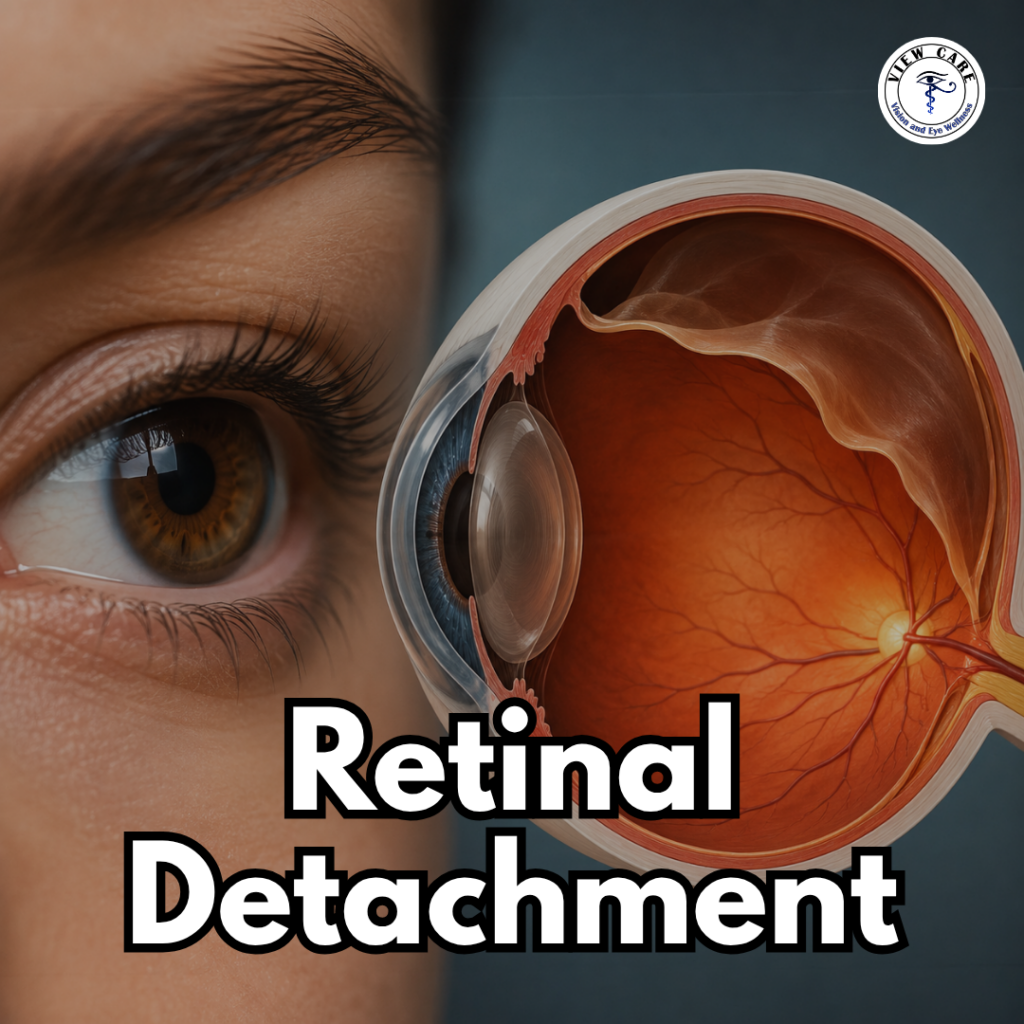
The retina is a thin, light-sensitive layer at the back of your eye. You can think of it as the camera sensor of your eye. It captures the light entering your eye and helps your brain turn that information into the images you see.
A retinal detachment occurs when the retina separates from the tissue underneath it. Once this happens, the affected part of the retina may not receive the support and nourishment it needs. If the condition is not treated promptly, permanent vision loss can occur.
Retinal detachment is not the same as ordinary blurred vision or a temporary change in eyesight. It is a potentially sight-threatening condition that requires urgent assessment by an eye doctor.
Why Does Retinal Detachment Happen?
There is a jelly-like substance inside the eye called the vitreous. As we grow older, this jelly naturally becomes more liquid and can pull away from the retina.
In some people, this pulling can create a small tear or hole in the retina. Fluid can then pass through the opening and collect underneath the retina. This can cause the retina to lift away from its normal position.
This is the most common type of retinal detachment.
However, retinal detachment can happen in different ways, and not every case is caused by a retinal tear.
What Are the Different Types of Retinal Detachment?
Doctors generally describe retinal detachment in three main forms.
Retinal Detachment Caused by a Tear
This is called a rhegmatogenous retinal detachment. It happens when a tear or hole develops in the retina and fluid passes underneath it.
This is the most common type of retinal detachment.
Retinal Detachment Caused by Pulling
In some conditions, scar-like tissue can develop on the retina and pull it away from the back of the eye.
This type is commonly associated with advanced diabetic eye disease.
Retinal Detachment Caused by Fluid Build-Up
Sometimes fluid collects underneath the retina without a retinal tear.
This can happen because of inflammation, certain eye diseases, infections, tumours, or other medical conditions. Treatment in these cases focuses on treating the underlying cause.
What Are the Risk Factors for Retinal Detachment?
Retinal detachment can happen to anyone, but some people have a higher risk.
High or Severe Nearsightedness
People with significant short-sightedness, also called myopia, may have a higher risk because the shape and structure of the eye can make the retina more vulnerable.
Increasing Age
Changes in the vitreous gel inside the eye become more common with age. These changes can sometimes pull on the retina and cause a tear.
Previous Cataract or Eye Surgery
People who have undergone certain eye surgeries may have an increased risk of retinal detachment. Cataract surgery is one recognised risk factor.
Previous Eye Injury
A significant injury to the eye can damage the retina and increase the risk of retinal tears or detachment.
Previous Retinal Tear or Detachment
If you have already experienced a retinal tear or detachment, your risk may be higher, including in the other eye.
Family History
Having a close family member with retinal detachment can increase your risk.
Certain Retinal Conditions
Some people have naturally weak areas in the retina. An eye doctor may identify these areas during a detailed eye examination.
Diabetes
Advanced diabetic eye disease can cause abnormal tissue and blood vessels to pull on the retina, potentially resulting in tractional retinal detachment.
What Are the Symptoms of Retinal Detachment?
One of the most important things to understand about retinal detachment is that it may not cause pain.
Instead, changes in your vision can be the first warning.
Sudden Flashes of Light
You may notice brief flashes, particularly toward the side of your vision.
People sometimes describe them as tiny flashes or “lightning” in the eye.
Flashes can have several causes and do not always mean retinal detachment. However, new or sudden flashes should be assessed promptly, especially when accompanied by other symptoms.
Sudden Increase in Floaters
Floaters are small dots, lines, rings, or cobweb-like shapes that appear to move across your vision.
Occasional floaters can be harmless. But if you suddenly notice many more floaters than usual, it may indicate a retinal tear or another problem inside the eye.
A Dark Curtain or Shadow
This is one of the most important warning signs.
You may feel as though a dark curtain, shadow, or veil is moving across part of your vision.
This can indicate that the retina is becoming detached and requires urgent assessment.
Blurred or Reduced Vision
Your vision may become blurry or distorted.
The amount of vision affected depends partly on where the retinal detachment occurs and whether the central part of the retina is involved.
Loss of Side Vision
Some people first notice that part of their peripheral, or side, vision is missing.
Because this can develop gradually, it is possible to overlook it at first.
What Signs Can an Eye Doctor Detect?
During an eye examination, an ophthalmologist may be able to identify signs of a retinal tear or detachment even when the patient is not experiencing severe vision loss.
A detailed examination may involve dilating the pupil so that the doctor can examine the retina properly.
Depending on the situation, additional imaging or testing may be required.
This is why an eye checkup should not be delayed when new flashes, floaters, or changes in vision appear.
How Is Retinal Detachment Diagnosed?
A retinal detachment is diagnosed through a detailed eye examination.
Your eye specialist will usually ask about:
- When your symptoms started
- Whether you are seeing flashes
- Whether you have new floaters
- Whether you have noticed a shadow or curtain
- Whether your vision has changed
- Previous eye surgery
- Previous eye injuries
- Previous retinal problems
- Family history of retinal detachment
The doctor may perform a dilated retinal examination. In some situations, imaging such as an ultrasound scan of the eye may help when the retina cannot be seen clearly.
A routine eye test may not be enough to evaluate every retinal problem. A sudden change in vision requires an appropriate retinal examination.
What Are the Treatment Options for Retinal Detachment?
Treatment depends on the type, location, size, and extent of the detachment and whether the central part of the retina is affected.
Laser Treatment
If a retinal tear or small retinal break is found before a significant detachment develops, laser treatment may sometimes be used to create a protective barrier around the affected area.
The purpose is to reduce the chance of fluid passing through the tear and causing a larger detachment.
Cryotherapy
Cryotherapy uses controlled freezing to create a scar around a retinal tear.
This scar helps seal the affected area and prevent fluid from passing through the retinal break.
Pneumatic Retinopexy
In selected cases, a small gas bubble may be placed inside the eye.
The bubble helps push the retina back toward its normal position. Laser treatment or freezing may then be used to seal the retinal tear.
The patient may need to maintain a particular head position after treatment so that the gas bubble stays in the correct location.
Scleral Buckling
A small flexible band may be placed around the outside of the eye.
It gently changes the shape of the eye wall and helps bring the eye wall closer to the detached retina.
This technique has been used for many years and remains an important retinal detachment treatment.
Vitrectomy
During vitrectomy surgery, the surgeon removes the jelly-like material inside the eye and repairs the retinal problem.
A gas bubble or another material may be used to help keep the retina in position while it heals.
The exact procedure depends on the individual patient’s condition.
How Successful Is Retinal Detachment Treatment?
Modern retinal surgery has significantly improved the chances of successfully putting the retina back in place. Current ophthalmology literature reports anatomical success rates above 90% with modern repair techniques, although individual outcomes vary.
However, successful surgery does not always mean that vision will immediately return to normal.
One major factor is whether the central part of the retina, called the macula, was affected before treatment. Earlier treatment generally offers a better chance of preserving useful vision.
This is why waiting for symptoms to disappear is not a good idea.
When Should You See an Eye Doctor?
Seek urgent eye care if you suddenly experience:
- New flashes of light
- A sudden increase in floaters
- A dark curtain or shadow in your vision
- Sudden loss of part of your side vision
- Sudden blurred or reduced vision
- New visual changes after an eye injury
These symptoms do not automatically mean you have retinal detachment. There are other possible causes.
But because retinal detachment can threaten vision, it is safer to get an urgent eye examination rather than wait at home.
If you are searching online for an eye specialist near me, best eye specialist near me, eye specialist Delhi, or eye specialist Laxmi Nagar, look for an eye care facility that can provide appropriate retinal evaluation and urgent ophthalmic care.
For patients in East Delhi, those searching for an eye specialist in Mayur Vihar Phase 1 can consider an established eye clinic such as View Care for professional eye evaluation.
What Can Happen If Retinal Detachment Is Not Treated?
Retinal detachment should never be ignored.
Possible complications include:
Permanent Vision Loss
If the retina remains detached for too long, retinal cells can become damaged, potentially resulting in permanent loss of vision.
Macular Damage
If the central part of the retina becomes detached, central vision can be significantly affected. Even after successful surgery, vision may not return completely to its previous level.
Recurrent Retinal Detachment
In some patients, the retina can detach again after surgery and may require additional treatment.
Scar Tissue Formation
Scar tissue can develop inside the eye and pull on the retina. This is known as proliferative vitreoretinopathy and is an important reason why some retinal detachments are more difficult to repair.
Other Post-Surgery Problems
Depending on the procedure, patients may experience temporary blurred vision, redness, discomfort, or other complications. Your retinal surgeon will explain the specific risks associated with the recommended procedure.
Two Illustrative Success Stories
Story 1: The Sudden Flashes That Were Not Ignored
A 52-year-old man noticed sudden flashes of light and several new floaters in one eye.
He initially thought it was simply an age-related vision change. Instead of waiting, he visited an eye specialist for a detailed retinal examination.
The examination identified a retinal tear before it progressed to a larger retinal detachment. The tear was treated promptly with laser treatment.
His case highlights an important lesson: not every retinal tear becomes a retinal detachment, but early detection can provide an opportunity to treat a tear before it progresses.
This is an illustrative educational example, not a report of an actual patient treated at View Care.
Story 2: The Curtain in the Vision
A 61-year-old woman suddenly noticed a dark shadow spreading across the side of her vision.
She did not have significant pain, so her first thought was that she could wait until the next day.
Instead, her family encouraged her to seek urgent eye care. Examination confirmed retinal detachment, and she underwent retinal surgery.
After treatment and follow-up, the retina remained attached and her vision improved significantly, although her final visual outcome depended on the extent and location of the original detachment.
The key lesson is simple: a painless change in vision can still be an emergency.
This is an illustrative educational example, not a report of an actual patient treated at View Care.
Can Retinal Detachment Be Prevented?
Not every retinal detachment can be prevented.
Some risk factors, such as age, family history, or the natural structure of the eye, cannot be changed.
However, you can reduce avoidable risks and improve the chances of early detection.
Get Regular Eye Examinations
People with significant myopia, previous retinal problems, diabetes, previous eye surgery, or other risk factors may need regular retinal examinations as advised by their eye doctor.
Protect Your Eyes From Injury
Use appropriate protective eyewear during activities where the eye could be injured.
Control Diabetes
If you have diabetes, keeping your blood sugar under appropriate medical supervision can help reduce the risk of diabetic eye complications.
Do Not Ignore Sudden Visual Changes
This may be the most important step.
A new shower of floaters, flashes, or a curtain-like shadow should not be dismissed as “normal ageing.”
Retinal Detachment: The Most Important Things to Remember
Retinal detachment can sound frightening, but modern treatment offers effective ways to repair many retinal detachments.
Remember these key points:
Sudden flashes can be a warning sign.
A sudden increase in floaters should be checked.
A dark curtain or shadow across your vision needs urgent attention.
Retinal detachment may occur without pain.
Early diagnosis and treatment can help protect vision.
And perhaps most importantly:
When it comes to sudden changes in vision, don’t wait for the symptoms to get worse. Get your eyes checked promptly.
Where Should You Go for Retinal Problems?
If you notice sudden changes in your vision, consult an experienced eye specialist or ophthalmologist who can perform an appropriate retinal examination.
For people searching for an eye hospital in Delhi, eye hospital Delhi, best eye hospital in Delhi, or an eye clinic near Mayur Vihar Phase 1, it is important to choose a facility where retinal conditions can be properly evaluated and managed.
View Care provides eye care services for patients looking for professional eye evaluation in Delhi. If you are experiencing sudden flashes, new floaters, a curtain-like shadow, or sudden vision loss, seek prompt ophthalmic evaluation rather than waiting for a routine appointment.
Frequently Asked Questions About Retinal Detachment
Is retinal detachment painful?
Usually, retinal detachment does not cause significant pain. Sudden changes in vision are more typical warning signs.
Can retinal detachment heal on its own?
A confirmed retinal detachment should not be assumed to heal on its own. Treatment depends on its type and extent, and urgent assessment is important.
Can floaters mean retinal detachment?
New or suddenly increased floaters can be associated with a retinal tear or detachment, although floaters can also have less serious causes. New sudden floaters should therefore be evaluated promptly.
Can retinal detachment cause blindness?
If untreated, retinal detachment can cause severe and potentially permanent vision loss. Early diagnosis and treatment can improve the chances of preserving useful vision.
Can retinal detachment happen after cataract surgery?
Yes. Previous cataract surgery is recognised as a risk factor for retinal detachment.
Should I wait for my eye test if I see a dark curtain?
No. A curtain-like shadow or sudden loss of part of your vision requires urgent assessment rather than waiting for a routine eye test.
Conclusion
Retinal detachment is a serious eye condition, but early diagnosis and modern treatment have made successful retinal repair possible for many patients.
The biggest mistake is assuming that a sudden change in vision will simply disappear.
If you suddenly see flashes, many new floaters, a dark curtain, a shadow, or a sudden change in vision, contact an eye doctor or eye specialist immediately.
Your eyes may not hurt. Your symptoms may initially seem minor. But when the retina is involved, time can matter.
An urgent eye checkup can help determine whether the symptoms are harmless or whether immediate treatment is needed.
If you are searching for an eye specialist near me, eye specialist Delhi, eye specialist Mayur Vihar Phase 1, eye specialist Laxmi Nagar, or the best eye hospital in Delhi, make sure you choose qualified ophthalmic care and do not delay evaluation when sudden retinal symptoms occur.